By Ben Cole
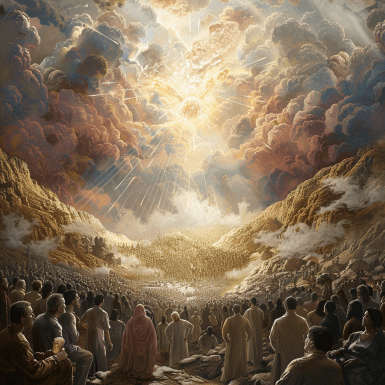
- Mountain peaks are a good way to visualize the book of Joel.
- Has anyone here ever hiked up to the top of Mt. Everest? Me neither. Has anyone hiked up a different mountain? Everest is one of those single massive peaks that sticks above the rest, but most other mountain peaks are surrounded by other peaks of similar magnitude. Joel resembles the latter of these. We will read up to the peak of Joel 2:12-14, Joel 2:18-20, and then summit again at Joel 2:26-32
- Much like a mountain peak, it will take work and digging down deep internally to summit the peaks; we will likely spend more of our time climbing today through the first two chapters. But also like a mountain peak, the view from the top and the climb down are fantastic! I love this mountain and climb it frequently; it still does not disappoint!
- And also, much like a mountain peak, you revel in an ability to tell people about it. You want to tell your family, to recount to your friends, to write it down for others to read in a post or a letter. That is the opening call of Joel, as we will read in a minute, as he says to pass it on to every generation. But first let’s pray and lay out the map of the mountains we are about to climb.
- Has anyone here ever hiked up to the top of Mt. Everest? Me neither. Has anyone hiked up a different mountain? Everest is one of those single massive peaks that sticks above the rest, but most other mountain peaks are surrounded by other peaks of similar magnitude. Joel resembles the latter of these. We will read up to the peak of Joel 2:12-14, Joel 2:18-20, and then summit again at Joel 2:26-32
- Map: when you look at a backcountry map, you are given the main highlights along the way of a windy trail leading to the destination. In our case today, Joel will be our Lewis and Clark explorer and I will be the tour guide, walking along the main markers of the trail he laid out. The main markers through which Joel shows the way to the peak are as follows and require some digging to understand:
- The Day of the Lord – Zion – Repentance – Promises for the repentantDay of the Lord
- Referred to multiple times, the day of the Lord is not just one day, past or future. The day of the Lord for Joel is perhaps better understood, not as a singular day, but as a time of reckoning, chronologically unrestrained and repeated.
- For instance, the day of the Lord is descried as when He leads His army to destroy, when He pours out His Spirit on all mankind, and when all nations come to the valley of decision. These are not the same, nor reflect much similarity aside from that they demonstrate an active move of God on earth.
- The day of the LORD is the essence of God’s judgment and also of His restoration; it’s Joel’s way of titling the active move of God in and among His people (and the world at large, for that matter)
- Zion
- In essence, Zion is where God resides.
- Similar to the Day of the Lord, the term Zion refers not to one specific time or place, but to a concept that goes beyond any singularity of definition. [And if anyone wants, I have an entire teaching on Zion which I wrote at the time of our firstborn Zion’s birth.]
- Succinctly, Zion is:
- a literal place (the mountain of the Lord, physically speaking in Jerusalem)
- a concept to direct worship (lifting their eyes to Zion, the place where the temple and God’s presence sat through history)
- a promise that God will live with His people, dwelling in Zion
- a promise of a place where God will set up His forever reign of justice and peace
- But even saying that, it is so much more; the concept and the usage are rich and deep, beyond what we understand. Psalm 48 gives a tip of the cap toward this profundity, a psalm dedicated to Zion itself and how it exults the LORD; it’s worth a read.
- Repentance
- This is the big, main point of so many of the prophets. There is destruction that has to come for those rejecting the Lord, BUT if the people would return, they would be spared the judgment. The prophets were sent to call the people back to God (Jeremiah 35:15).
- The word repent literally means return, to turn around; it’s a kind of yellow diamond on the side of the road crying “U-turn required” – this backcountry map has a big, bold U-turn right in the middle of the map.
- And this is the first big pinnacle peak: if you repent, God will relent the judgment.
- Promises for the repentant
- Deliverance/salvation for repentant
- Restoration to a greater degree than what was held before, vindication
- Holy Spirit poured out
- Destruction on enemies
- God’s presence in Zion / with His people
- The Day of the Lord – Zion – Repentance – Promises for the repentantDay of the Lord
- Joel 1:1
- Who is Joel? Tell me everything you know about Joel. There are some 14 or 15 Joels in the OT, 13 / 14 others and this one. He is the son of Pethuel and that’s about all we know. His name is two words in Hebrew together: Jehovah (often shortened, in this case to Jo) and El (the One God) meaning Jehovah is the One GOD.
- Some scholars believe he was theologically trained, as he is found to quote / allude to Isaiah, Zephaniah, Amos, Nahum, Ezekiel, Obadiah, and Malachi (and I would add the Psalms to that list). The lack of introduction could also lend itself to him being a known figure as no introduction was needed.
- The alternative is that he was unknown and need not become known. He was not trained and only knew what he knew because the Lord revealed to him as he sought out the Scriptures. In this rendering, Joel is nothing more than you or I, someone who loves God, loves the Word of the LORD, and loves others enough to pass on the message.
- Regardless of who he is, the main point is: “hear the word of the LORD.”
- So who is Pethuel? Tell me everything you know about Pethuel…ok, I don’t know anything either. Which to me is so special! The important, strong, operative reading of verse one is something like “from a nobody, son of a nobody comes the word of the Lord.” This afternoon I pray you hear the word of the Lord from Ben, son of Barry. Who is Ben and who is Barry? Essentially, nobody son of a nobody. So focus on the Word of the Lord!!
- Who is Joel? Tell me everything you know about Joel. There are some 14 or 15 Joels in the OT, 13 / 14 others and this one. He is the son of Pethuel and that’s about all we know. His name is two words in Hebrew together: Jehovah (often shortened, in this case to Jo) and El (the One God) meaning Jehovah is the One GOD.
- Joel 1:2-3
- Tell your descendants
- This is reminiscent of Deuteronomy 6 with the shema. And when Joel again says in 2:1 to sound the alarm on my holy mountain, the call is similar to Isaiah 58:1, a call to repentance and worship in fasting, something we will see here in Joel presently.
- The aged were the ones who would have a context for how great the devastation was of the locust. They are called upon to pass along the magnitude of the destruction, unlike any other they’d seen.
- Tell your descendants
- Joel 1:4-7
- Locust
- Real locust? Historical event? Human army? Or simply imagery to show a sign of the LORD’s destruction?
- The answer is yes. The first chapter is clearly a historical event, mentioned for reference and for recall, while in chapter two the locust are named as humans (2:2) and seem to act and do as if it were a human army. This rendering makes sense as the OT prophetic tendency was to use a historical event as a launch pad to understanding the devastation to come for not following the LORD. In this representation, chapter 1 reflects the natural devastation coming from a locust plague and chapter 2 moves to a discussion of a real army coming to enact the judgment of the LORD on the people of Israel.
- Remember, friends, this section of our text today requires some digging and explanation. But, I truly love the way this book is laid out and it will culminate in beautiful application and worship – so hang with me as we get there!
- v5 – “weep and wail” – “sweet fruit”
- Contrasting the joy of fruit with the wailing and bereft state of desolation
- A number of years ago, a “locust cloud” was recorded as seen from 1,200 miles away off the coast of north African countries, covering no less than 2,000 square miles, a cloud which decimated England upon arrival.
- Locust multiply in a factor of 20, it is stated by biologists. An initial swarm may number hundreds of billions, in which case the following swarm would be trillions in number, as happened in Kenya and Ethiopia 4 years ago
- Locust
- Joel 1:8-17
- One of the main reasons they mourn might be unnoticed to the 21st century gentile ears; they were instructed to mourn for the grain and drink offerings were withheld. So not only was the food absent, but their ability to sacrifice and be right with God was also absent. This is great cause for sadness and weeping!
- The drunkards, so lazy that they must be woken up, are filled with sadness to lose wine. And this shows the ubiquitous sweep of the effects; from the top down, it affected everyone.
- Joel calls on everyone. And everything. He brings personification of the ground in mourning (v10) and of gladness drying up (v12) to call out the message.
- Joel 1:18-20
- The Day of the Lord goes beyond even the plague of the locust. God sends a fire as well (v19)
- Joel 2:1-11 (read)
- It’s a bad deal when the LORD removes His provision. It’s an entirely different and categorically worse deal when God intentionally darkens and sends destruction for the final day of the LORD (Joel 2:10-11)
- What I described as mountain peaks at the outset, the Hebrew writer and readers would call a chiasm. This is a very cool literary device! It’s a tool used to both build up and ascend to a climax and then descend out in the very same way it was ascended to emphasize the climax.
- We see the chiasm as follows (draw on whiteboard)
- Punishment: the Locust Plague (1:2-20)
- Punishment: the Northern Army (2:1-11)
- Transition: Repentance and Response (2:12-19)
- Forgiveness: the Northern Army Destroyed (2:20)
- Punishment: the Northern Army (2:1-11)
- Forgiveness: the Locust-Ravaged Land Restored (2:21-27)
- Punishment: the Locust Plague (1:2-20)
- The reversal of the locust plague is delineated and a wonderful realization is given when we see the author’s use of the chiasm (see addendum #3 at bottom of page for chart)
- In this section we see the build up to the high peak; such a crescendo! Like many a great piece of music, this composition builds to such a frenzied high point with great need for a relief. And it does come, praise the Good Lord. Classical music calls this resolve going from “dissonance” to “consonance.” It’s the annoyance like the sound of the scratching of a chalkboard that results in a chorus of beautiful harmony. Resolution does come, praise the LORD.
- Joel 2:12-14
- This is the great peak of the book, the peak of the OT, the peak of the NT, the peak of the story of God. If we repent, He will show forth His never-ending love! His hesed!
- YET EVEN NOW!
- Even at this moment…it’s still possible…do this now!…in spite of all that, even now…there is still time!
- With ALL your heart!
- And back to the shema we go from Deuteronomy 6. This passage has been recited more than any other in history (I didn’t do any research on that, but I imagine it’s about true based on Jewish tradition). Jesus Himself quoted it as the most important: “love the LORD your God with all of your heart, soul, mind, strength… and love your neighbor as yourself.”
- Repent, lament, and God will relent. We turn back to God, and in so doing we mourn sin.
- I will be honest to say I don’t weep or mourn for my sin well. Oh that God would teach me how to weep for my sin!
- Just like this passage in Joel, I think of God’s mercy described in Romans 9:22-24
- This is such a rich section into which we can dive, but I’ll let the Word speak for itself in this moment and just leave Romans in Romans for now.
- Joel 2:15-17
- In spite of a promise, that does not negate the need for fasting and weeping
- v17 harkens to Moses’ request that God would save His people (Exodus 32)
- Joel 2:18-27
- Another set of mountain peaks, vv18-32 God affirms He will be zealous for His land, His people and will restore so much of the devastation, even to the point of leaving it better.
- v25 – Restoration is beyond even just restoring the food that was devastated; God also promises to restore the time! What a beautiful promise of God’s far reaching grace:)
- v27 – in contrast to 1:11, it’s wonderful to note: human efforts lead to shame, but God’s work removes shame forever (2:27)
- Joel 2:28-32
- The promise of the Spirit is also the promise of the presence of God being restored. With no sacrifices to cover their sin, God’s presence was no longer available; with restoration of food comes restoration of sacrifices. Great joy for the people!
- And that is primarily the concern of Joel regarding the Spirit, to show that Yahweh is among His people. It is largely a marker of the day of the Lord and of God’s presence with His people again.
- He continues the same verbiage from the previous verses, that new rains will be poured out, turning now to describe the LORD as pouring His Spirit on all mankind. The vast sweep of both is indicated as well (overflowing vats, full threshing floors, plenty to eat, all mankind, sons and daughters, slaves, and on He goes)
- So when it describes all of the people on whom the Spirit will be poured, what does that mean? To understand the scope of this promise, we turn to the great theological work: the movie Ratatouille. The crucial phrase from the famed Chef Gusto is “anyone can cook” championed by a small rat Remy. At the end, the human connected to Remy realized the operative meaning of the great chef: “it’s not that everyone is a great chef, but that a great chef can come from anyone.”
- Rather than debating how vast the scope is to this outpouring (if it’s all people regardless, or if it means all believers, or if it refers to a special one-time filling, or if it only happened in the book of Acts never to be repeated, etc), the reality is that God says will pour out His Spirit. He is in charge of when and whom and how, and we get to receive and petition it!
- I will say this: consistent with the style of Joel’s writing, we see him employ a sweeping application of mourning affecting everyone, including the drunkards, in chapter one. Here as well, Joel brings everyone into playing field. No one seems to be missed, even down to the male and female servants. His point is poignantly intended to be this: just as the mourning and devastation affects everyone, so too the blessing of the Spirit.
- Testimony: this past week, I sent an email to a soccer buddy from years ago who is a missionary in Indonesia. It’d been a year or so since I had talked to him. His reply makes me worship God for the way in which He works. My friend told me that he and his wife had both had a dream the other night with me in it, each with an interesting aspect for things we are praying through in our home. God poured His Spirit to a friend and his wife both on the other side of the world the exact time I reached out to him.
- The promise of the Spirit is also the promise of the presence of God being restored. With no sacrifices to cover their sin, God’s presence was no longer available; with restoration of food comes restoration of sacrifices. Great joy for the people!
- Joel 3:1-21 (read vv1-8)
- On the trail map, you’ll notice we begin our descent but it is not without hope or promise. We see in this chapter the overarching truth that God will be with His people!
- The nations will be judged. Joel points out why and how they will be destroyed. Arguably, had Joel not included this chapter, the storyline would be incomplete. An opener discussing a locust plague moved to discussion on judgment moved to a call to repentance and restoration ultimately leading to the judgment of enemy nations. The culmination is the elimination of all opposition to God, internal and external. His victories are final!
- A note on the victory: the response of the LORD to a repentant people is a chapter full of His affirmative action (I restore…v1; I will…v2,2,4,8,12,21; I am going to…v7; I AM the LORD your God v17)
- Joel 3:9-17 (read)
- Joel 3:9-10
- Isaiah 2:4 directly contrasts this from Joel. Likely it is that Joel was written first, then Isaiah capitalizes on a phrase that became popular to make the contrast the God will instead call for the reverse of Joel’s decree. One is pounding into sword and the other pounds in reverse, from sword back to plowshares/shovels for barn work.
- This is one of the highest verses the Jewish people cling to for the Messiah. And one of the biggest reasons they don’t receive Jesus as the Messiah because that did not happen in the physical. They argue that Jesus could not have fulfilled the Messianic role if He did not subdue enemies such that no more physical wars existed and swords were converted to plows and shovels. We must, as believers in Jesus, recall and forth call that the promise is God at work for a spiritual eternal reality, not just a military take over.
- For the follower of God, coming down from the mountain of Joel’s big peaks to the valley of Jehoshaphat is one of trust in God’s final work. Joel here is not calling for a frenzied sword-wielding craze. Rather, it is an act of power and an act of obedience to carry the sword of the Spirit and accompany our Commanding Officer to victory together on the battlefield as He wins the battle for His people (see the verbs of action God puts forth; He is the One operating for the victory)
- Isaiah 2:4 directly contrasts this from Joel. Likely it is that Joel was written first, then Isaiah capitalizes on a phrase that became popular to make the contrast the God will instead call for the reverse of Joel’s decree. One is pounding into sword and the other pounds in reverse, from sword back to plowshares/shovels for barn work.
- Joel 3:11-15
- Valley of Jehoshaphat – meaning “Jehovah sits here to judge”
- Joel 3:16-21
- The Lion of Zion! He roars from Zion! He is present and defending His pride rock.
- v18 – the best and final version of the promise land which flows with milk and honey. God keeps His promises!
- The book has an epic ending. Joel, in a phrase, stamps God’s signet ring to the whole scroll by saying: “For the LORD dwells in Zion.”
- Thoughts from the book
- Why do I like the book of Joel so much?
- So clear
- Imagery that is powerful and easy to follow
- There is no indictment specifically mentioned in the book for God’s people. This makes the book super easy to transfer to our current timeline. The barriers to application are limited!
- The Gospel is the center of the book; God’s heart is true through all time to punish sin, yet have bounds and bounds of grace, culminating
- It’s the Gospel in three chapters. It is, in an odd way, a beautiful way to think about evangelism:
- Chapter 1 – weep and wail on account of the punishment/destruction (sin separates from God)
- Chapter 2 – if you repent, God relents for He is slow to anger and abounding in lovingkindness (Repent and confess your sins and God will pour out His hesed)
- Chapter 3 – I will be your God and will dwell with My people (My presence is with My people forever).
- It’s the Gospel in three chapters. It is, in an odd way, a beautiful way to think about evangelism:
- Why do I like the book of Joel so much?
Addendum #1: Does God cause harm? There is an underlying theology question in the book of Joel: did God send the plague of locust? Does God send calamities as ways to prune us or ways to rebuke us?
- We see in this book, the calamity, Joel points out, didn’t just happen. It was God’s judgment. (Joel 2:11 declares God as the owner/leader of this army of retribution.) Joel affirms God as the leader of the destruction; it’s not just that God can use it for good, but that He actually is the One doing the acting.
- I leave these scriptures on this topic in the notes for anyone who wants to go back and read them, but we won’t take time to go through them now.
- James 1:12-18 – Trials are for perseverance, God does not tempt, we are tempted of our own evil desires
- I Corinthians 10:13 – with the temptation God will provide a way of escape
- Romans 8:28 – “God uses all things for the good of those who love God and are called according to His purpose”
- Job 1 – Satan is the one who initiates and who tears down Job, but he needs God’s permission beforehand, permission God grants so that Satan will be rebuffed by Job’s faithfulness. Yet again, in the same chapter (Job 1:21) Job is quoted saying “The LORD gives and the LORD takes away. Blessed be the name of the LORD.”
- Deuteronomy 28 – there is blessing for those who obey and curses for those who disobey the Lord’s commands
- Hebrews 12 – endure all suffering as discipline; it’s not God fighting against us, but God fighting for us
- Amos 3:6 – “if a calamity occurs in a city, has not the LORD done it?”
- What we see is both sides of that question. And, like many things in the Scriptures, we hold tough truths in tension and affirm both. We can see and affirm that God is behind it all, even that He brings the calamity at times, but that He has purposes. In preparing, I read an article on this from John Piper who defends that holding this tough truth actually affirms God’s sovereignty and is the only source of true hope we have, that He is in control and brings it all.
- It reminds me of the truth King David also affirmed. When given the choice of three years of famine, three months of the Philistines destroying sword, or three days of the sword of the LORD, David chose the LORD’s punishment. Though far more powerful even in three days, God also is the One who is full of grace. (A very interesting read for those who want to dive in more, check out I Chronicles 21)
- When God sends His judgment, it’s uniquely tied to His mercy. When Adam and Eve were banished from the garden, it was God’s mercy that they wouldn’t eat from the tree of life and live forever in a sinful state before He sent His Son to redeem. And the same was true of Jonah; God sent a torment of sea and then a whale to swallow him up, ultimately leading Jonah to do what he was supposed to do in the first place. God’s judgment is not apart from His mercy!
- Where else do we see locust in the Bible? Doing the work of the LORD?
- Exodus 10 – plague on Egypt
- Deuteronomy 28 – as part of the section on the curses of those who do not obey or observe the commandments of the LORD (Deut. 28:38)
- Insert any number of studies that prove the strength of a family, strength of passing down through the generations
Addendum #2: what is the scope of the pouring out of the Spirit?
- For Joel, the Spirit is a sign of the day of the LORD. It’s a sign of God’s favor and gifting to mankind. The greatest gift is the Spirit Himself, God being with His people, the Gospel that God will give grace instead of punishment to those who call upon the LORD (v32). It’s primarily not about the gifts of the Spirit, not about speaking in tongues. This is important to note, perhaps most needfully because when Peter quotes this passage in the book of Acts, he appropriates Joel’s prophecy to a moment when tongues were being spoken widespread. It would be, then, easy to think it was primarily a conversation about the gifts, rather than a promise in context of the OT Gospel being preached that God will relent of calamity and pour out His presence among and with us!
- To the point, for Joel, the pouring of the Spirit could more appropriately be called an eschatological event, a marker of the God’s beginning of the Messianic age when He will live on and in His people.
Addendum #3: The Reversal of the Locust Plague
| 1:2-20 | 2:21-27 |
|---|---|
| Elders are to remember, mourn, and tell the story for generations to come (vv. 2–3) | People will have plenty and will praise and never again be shamed (vv. 26–27) |
| The four locust swarms eat everything (v. 4) | People are repaid for the damage of the four locust swarms (v. 25) |
| Wine is gone and oil fails (vv. 5, 10) | Wine and oil restored (v. 24b) |
| Grain depleted & granaries ruined (v.10,11, 17) | Grain restored and threshing floors full (v. 24a) |
| Land is parched (vv. 12, 17) | Rains come (v. 23) |
| Trees are stripped bare (vv. 12, 19b) | Trees bear fruit (v. 22b) |
| Animals dying (vv. 18, 20) | Animals have pasture (v. 22a) |
| “burned up” (vv. 19–20) | Land “not afraid” (v. 21) |
Helpful resources:
- Spoken Gospel: helpful video on how the book points to Jesus – great use of ten minutes!
- Bible Project: explainer videos
- Streetlights: listen on the go with a beat in the background
- Keys for Kids: portable audio Bible and stories on audio that we listen to in our family alot
Joel Audio Transcription (Auto-Generated)
0:00: OK.
0:01: You, you’re on, you’re live Hot, mic, hot, hot.
0:05: OK.
0:07: Wherever you’re going to that, don’t you?
0:10: You that great.
0:13: We are going to begin a book together called Joel.
0:18: It is not the most popular book to read, but it’s beautiful.
0:21: I love it.
0:22: And mountain peaks is kind of my way of visualizing it for us.
0:26: They’re a good way to visualize the book of Joel.
0:30: Has anyone ever climbed Mount Everest?
0:35: Me neither has anyone anybody, anybody climbed another mountain, any sort of other mountain?
0:39: Yes.
0:41: Piss, what’s up?
0:42: Let’s go.
0:45: I watched the movie.
0:46: There you go ahead.
0:47: Right.
0:49: Aside from Everest and others like that where it’s in a single soul peak, most of the mountains are part of a range where there’s other similar magnitudes next to it.
0:58: Such is the case with Joel, we are gonna summit and much like a mountain peak.
1:05: It takes some digging some internal strength to get up to the top.
1:08: And, but once we’re up there, there’s gonna be a couple of peaks that we hit.
1:12: So we work really hard to get to some chapters to get to the mountain peak that the Lord wants to give us his overview and then he actually does two or three different times.
1:19: Joel takes us up.
1:21: And so today he’s going to be our Lewis and Clark giving us the map and I’m gonna be the tour guide just walking you through the map.
1:29: And so as we go through Joel Summing together, it’s gonna look a little bit like that much like a mountain peak.
1:37: When you get up, you revel in the view, you just take it and you soak it in.
1:41: You also enjoy the downhill.
1:45: You also want to tell everybody about it.
1:47: You want to write home, you want to call home, you wanna share a post or a letter with somebody to tell people about it.
1:53: And share it with everybody.
1:54: Such is the case with Joel.
1:55: In fact, he opens with that, he says, tell your whole generations, tell everybody every pass it down to everybody, you know, and that for Joel is declaring a call for us as the same as we’re gonna do that.
2:09: Before we jump into what Joel says, we’re gonna pray and then I’m gonna give you kind of the map legend if you will, the the markers along the way.
2:17: So I will pray for us.
2:21: Lord.
2:21: We come before your word.
2:23: Not because well, because we know that without the shedding of blood, there’s no remission of sins and you give that to us and we know that man does not live on bread alone, but by every word that comes out of the mouth of God.
2:37: And so we ask that you would feed us today, you would give good shepherds to feed your people.
2:41: And so we pray that though many sheep have wandered astray, you would just give good shepherds to lead the people and you’d feed us because you are the great shepherd.
2:49: You are the good shepherd.
2:50: And so would you shepherd us today as you are going along a path on the mountain path?
2:53: Would you shepherd us?
2:54: We know that one fall, step left or right, we can fall but you are the good shepherd and we want to walk right next to you.
2:59: Not just, hey, go to that mountain over there but like walk every step with you.
3:02: So would you walk every step as we’re going through?
3:05: And if there’s anything we’re supposed to not talk about, you’d stop us.
3:08: Anything we don’t have planned to talk about, you would intervene.
3:12: Joel says that you’re going to rain down your spirit.
3:15: Amen.
3:16: And that is taken up and act.
3:19: When you did we ask that you would just rain down your spirit through our little ones.
3:24: We open our hearts to receive from them through our aged ones.
3:28: We ask that you would speak to them through all of us.
3:30: There’s just not anybody different on the outside that we all need to hear.
3:36: Please be with us Lord with your spirit and your word.
3:39: Amen.
3:40: So when you look at a backcountry map, you have those markers along the way.
3:45: the markers to get on that winding trail.
3:48: If you will up to the top, to this beautiful view where it kinda releases for us, something wonderful.
3:54: The markers are gonna be as follows.
3:56: They, they are the day of the Lord Zion repentance and promises therefore, for the repentance.
4:04: So I’m gonna talk through these as we are looking through the legend, if you will and then jump into the book.
4:08: The day of the Lord is referred to multiple times.
4:11: However, it’s a misnomer in a way.
4:13: It’s not just one day, the day of the Lord is not past or future singularly, but it’s better understood as a day of reckoning, chronologically not restrained.
4:24: It’s God’s move of action.
4:27: And for instance, the day of the Lord and Joel is described as when he leads his army to destroy, when he pours out his spirit on all mankind.
4:35: And when all nations come to the valley of decision, these are not the same and they do not reflect really much similarity.
4:43: Other than that, they demonstrate an active move of God.
4:46: So the day of the Lord and Joel is really him saying God is at work here, God is at move to one, take away enemies, two destroy sin and punish for unrepentant sin, three to give blessing.
5:01: And so it’s not it, it’s all of it.
5:02: And so the day of Lord is more than just a day.
5:06: But it’s really his move for his people, actually at large, for the world in total.
5:14: So Zion, another marker on our trail isn’t similarly to the day of the Lord.
5:18: It’s not just one specific time or place, but it’s actually a concept that goes beyond and it doesn’t really have a definition.
5:24: And if anybody really is interested, I have a teaching on Zion.
5:29: I did when our Zion was born a couple of years ago.
5:32: So if I can share an outline with you guys or share coffee or something and talk about it, I don’t like coffee.
5:37: So I would have to get something else, but we could share some time anyway.
5:41: So essentially Joel is Zion is one a, a literal place.
5:47: The mountain of the Lord, physically speaking, the city of Jerusalem.
5:50: It is a literal place.
5:52: It is b a concept of worship when they direct their, look, their eyes up to Zion.
5:56: And people are throughout history.
5:58: Called to look where the temple was.
5:59: God’s presence, sitting for his people.
6:02: See it’s a promise that God will live with his people.
6:06: He will dwell in Zion, future and current.
6:11: And it’s a promise of a place where God will set up his forever reign of peace and of justice.
6:17: So Zion is kind of all those all at the same time.
6:19: But even saying that it’s one of those things that in our Western world, not a gentile world, we don’t really understand immersed in the Jewish culture.
6:29: This is such a rich, deep description and it goes beyond describing in a lot of ways from the outside, especially.
6:36: So Psalm 48 Psalm 87 are two good ones to give you a concept for Zion.
6:41: like the Lord loves the gates of Zions.
6:43: More than all the dwelling places of Israel.
6:46: That’s from Psalm 87.
6:48: It just gives you a concept like what is he even talking about here?
6:51: Why dive into those?
6:52: They’re worth a read?
6:54: OK.
6:55: Repentance.
6:57: Another marker.
6:57: This is the big main point of so many of the profits.
7:01: There is destruction to come.
7:02: But if you repent, God will relent, the prophets were sent to turn the people back to God.
7:10: And so the word repent literally means to U turn to turn around and so on our back country map, there’s this big bold yellow sign like a U turn.
7:18: That’s like the center of our map today is this conception.
7:21: I actually wanted to find one just to hold it up and like tape it on the wall or something.
7:25: Just this big yellow sign we see on the road U turn, please turn around, repent, turn to turn repent.
7:32: And that is our first big pinnacle peak.
7:35: If you repent God over land and we’ll see that in a little bit.
7:38: And then, the other marker is the promises for the repentant.
7:42: God doesn’t just stop with, hey, you repent.
7:43: But like I’m going to give you promises, promises, being deliverance and salvation for the repentant promise, being restoration to a greater degree than what was held before.
7:54: Not even like when you see with job, right?
7:56: That’s kind of like more than the vindication is greater that God does, is more work.
8:01: He does more work than we can.
8:02: Holy Spirit being poured out.
8:04: That’s a promise, the destruction on your enemies.
8:06: That’s a promise.
8:06: God’s presence in Zion slash with his people.
8:09: That’s a promise.
8:11: So that’s our legend.
8:14: There’s our map, but let’s go back to what the Lord says.
8:18: All right, Joel one, I’ve resolved to read this.
8:21: I don’t know.
8:22: We’ll see how much I’m actually gonna be able to, I will read quickly and then hopefully talk slow enough to keep up with me, but it’s not too big and it’s definitely a book that has a lot of nuances to jump into to understand.
8:33: So I’m gonna read verse 11, the word of the Lord that came to Joel, the son of Pethel.
8:39: So who is Joel?
8:41: Tell me everything you guys know about Joel.
8:45: So to be well, great.
8:46: That’s about all we know.
8:47: He is like there’s for 14 or 15 of Joel’s in the Bible 13 or 14 other ones.
8:53: And this guy his name Jo Joel is, comes from Joe.
8:58: Jehovah, often shortened in the Bible this time to Joe and then l meaning the one God Joel.
9:04: So he’s saying Jehovah is the one God.
9:07: It’s his name potentially helpful.
9:09: Some scholars believe that Joel was theologically trained.
9:13: If you see quotes from all these other places like Isaiah, Zephania, Amos Nehe Ezekiel, Oba Malachi.
9:17: I would add Psalm to that list.
9:20: The lack of introduction also lends itself to thinking that Joel could be a known figure who doesn’t need an introduction.
9:29: Opposite of that is Joel was not known and need not become known.
9:36: He was not trained and he only knew the Lord because the Lord revealed himself to someone who is seeking him out.
9:41: He read the word and we, we we in that case, Joe would be someone who loved God and loved His word and loved others enough to tell other people about it.
9:51: He was nothing more special than you or I just wanting to hear from God and pass that along to other people.
9:56: So regardless of who he is, the main point is hear the word of the Lord equally.
10:01: We ask who is Pethel?
10:03: Well, nobody knows anything about Patrick.
10:05: Well, so we look at it and we say the II I would say the important strong operative reading of this is all right guys.
10:14: This is a book from a nobody son of a, nobody comes the word of the Lord.
10:20: And so this afternoon, I pray that you hear from Ben, son of Barry, who’s Ben and who’s Barry essentially a nobody son of a nobody point.
10:30: Main point being hear the word of the Lord, ok?
10:32: Like the operative strong thing, the word of the Lord is what’s coming to us, Joel 12 and three.
10:40: Hear this soil.
10:41: There’s enlist all inhabitants of the land.
10:43: Has anything like this happened in your days or in your father’s days, tell your sons about it and let your sons tell their sons and their sons the next generation.
10:53: So this brings us, it’s reminiscent of the Shama du Deuteronomy six.
10:56: Here O Israel, the Lord, our God is one and that was something that passed on over and over again.
11:02: And when we see in Joel two chapter one, he says, kind of sound the trumpet.
11:05: It kind of reminds me of Isaiah 58.
11:07: He says, sound the call.
11:09: Both of those passages talk about fasting.
11:12: So that’s what we’re going to see in Joel here, Joel calls on the aged.
11:17: Those are the ones who would have a context for how great this destruction was.
11:22: They’re the ones who have seen enough.
11:23: They’re the ones who’ve seen this in other days.
11:25: And he says, it’s been nothing short of extemporaneous.
11:30: You’ve never seen this before.
11:31: It’s, it’s never been seen before.
11:33: So they’re supposed to pass this on four.
11:38: What the gnawing locust has left The swarming locust has eaten what the swarming locust has left.
11:44: The creeping locust has eaten what the creeping locust has left.
11:46: The stripping locust has eaten awake, drunkards and wheat and whale.
11:51: All you drinkers of wine.
11:54: On account of the sweet wine that is cut off from your mouth.
11:56: For a nation has invaded my land mighty and without number, its teeth are the teeth of a lion and its fangs of a lioness.
12:04: It has made my vine and waste and my fig tree splinters, it has stripped them bare and cast them away.
12:08: Their branches have become white.
12:14: So is this these Locusts, are they real Locusts?
12:16: Is it just a historical event?
12:18: Is it a human army or is it simply imagery to show a sign of the Lord’s destruction?
12:23: And the answer is yes, it’s kinda all those.
12:26: The first chapter is clearly a historical event.
12:29: Hey, you guys remember that Locust plague.
12:31: That’s gonna, that’s gonna kind of image what we’re talking about today.
12:35: And then he moves on.
12:36: In chapter two, the Locusts are named as humans.
12:39: Chapter two verse two and they seem to do and to act as if they were a human army.
12:45: This rendering makes sense because the Old Testament prophetic tendency was to use a historical event as a launch pad to understand the devastation to come.
12:56: If you didn’t follow the Lord in this representation.
13:00: Chapter one reflects the natural devastation coming from a locust plague and chapter two moves to a discussion of a real army coming to enact the judgment of the Lord.
13:12: OK.
13:12: So I’m gonna remind you all good Sherpas remind their travelers to look up once in a while to see the peak.
13:19: So as your good Sherpa for the day, I’m gonna remind you, this is a section we’re digging into.
13:24: There’s some nitty gritties to help us understand it kind of why we’re digging.
13:28: But I love the way this book is laid out and it will culminate in a beautiful application and in worship.
13:36: So hang in with me while we get there.
13:42: Verse five, I read that but OK, I will focus on awake, drunkards and weep and wail all you wine drinkers on account of the sweet wine that is cut off.
13:55: So this contrasting this weeping and wailing, this sweet fruit.
14:00: They’re contrasting the, this bereft state of desolation and this sweet fruit.
14:07: The joy of fruit.
14:08: Fruit is often depicted in this joyous context.
14:10: It brings joy contrasting those two kind of just to give you that picture.
14:16: A number of years ago, I was listening to a sermon.
14:20: A locust cloud was recorded as seen 1200 miles from the coast of some North African countries covering no less than 2000 miles square.
14:34: A cloud of Locusts.
14:36: They decimated England upon arrival.
14:40: Locust theoretically, theoretically, they supposedly multiply in factors of 20.
14:46: So if the plague, the cloud started in the billions of numbers, which was supposed to be hundreds of billions.
14:54: The following storm would be trillions in number that happened a couple of years ago, Ethiopia and Kenya, there’s really nothing you can do about it.
15:02: You, you, you’re gonna go wave and stick at it or you can just get up our maybe the best way we do it, the worst way we do it is get a big help helicopter plane and just drop a bunch of chemicals on the Locust which also then drop on your kids and then your everything so bad idea.
15:21: So what, what do you do then?
15:23: You kind of just I also listening to the sermon from this guy, he said he was traveling through California and stopped at a gas station and on this side, it was just twigs and on this side it was fairly verdant.
15:33: Asked the attendant what’s going on?
15:36: He says, well, that was yesterday’s breakfast tomorrow.
15:41: They’re going over there.
15:43: That happens every 7 to 10 years.
15:45: You can’t do anything about it.
15:47: Locusts just ravage the area, they destroy it, they leave nothing left.
15:52: That’s kind of what he’s getting at here.
15:54: He’s like guys, do you see the devastation?
15:57: This is coming your way.
16:01: All right, Joel won eight through 17 whale like a virgin girded with sack cloth for the bridegroom of her youth, for the grain offering and the drink offering are cut off from the house of the Lord, the priests mourn the ministers of the Lord.
16:17: The field is ruined.
16:19: The land mourns for the grain is ruined.
16:21: The new wine dries up fresh oil fails, be ashamed of farmers whale o vine dressers for the wheat and the barley because the harvest of the field is destroyed.
16:32: The vine dries up and the fig tree fails the pomegranate and the palm also.
16:36: And the apple tree, all the trees of the field dry up.
16:40: Indeed, rejoicing dries up from the sons of men.
16:43: Gird yourself with sackcloth and lament o priests wail o ministers of the altar come spend the night in sac cloths o ministers of my God for the grain offering and the drink offering.
16:52: Are we withheld from the the house of your God consecrate a fast proclaim a solemn assembly.
16:58: Gather the elders and all the inhabitants of the land of the house of the Lord, your God and cry out to the Lord Alas for the day.
17:05: If the day of the Lord is near and it will come as destruction from the Almighty has not food been cut off before our eyes, gladness and joy from the house of our God.
17:15: The seeds shrivel under their clods.
17:18: The storehouses are desolate, the barns are torn down for the grain is dried up.
17:24: One of the main reasons I’m gonna point out here pause that this morning goes on is something we would miss again in our 21st century western gentile context.
17:37: They’re instructed to mourn for the grain offering is gone and the drink offerings are withheld.
17:45: So not only was the food withheld.
17:48: Great.
17:49: We can’t eat very well.
17:50: We’re hungry but their ability to sacrifice and become right with God again, to do what God says to do.
17:57: Obey God also withheld.
17:59: This is great cause for sadness and for weeping.
18:03: They had no way to be right again if you will.
18:06: Hm.
18:07: Yeah, the drunkards so lazy that they must be woken up are filled with sadness to lose the wine.
18:14: And this even here, Joel’s mentioning of them shows the ubiquitous sweep of everything.
18:19: It touches everybody.
18:20: Everybody is called to account here, it affected everybody.
18:23: Joel calls on everyone and he calls on everything.
18:29: He brings personification of the ground in mourning.
18:33: He says the ground is going to mourn and then the gladness dries up.
18:36: He personifies gladness to say that too has gone.
18:41: All of this is calling out the message that wow guys weep and wail.
18:46: So this is that mountain we’re talking about.
18:47: It’s, it’s tough.
18:48: It’s gritty.
18:49: Joel is climbing because he knows what the top is gonna be.
18:53: We’re climbing.
18:54: We have a better view than Joel ever did of what the mountain top looks like, but don’t lose the climb.
19:04: In fact, that’s adding to the beauty in a lot of ways.
19:09: 18, how the beasts grown, the herds of cattle wander aimlessly because there is no pasture for them.
19:16: Even the flocks of sheep suffer to you.
19:20: Oh Lord, I cry for fire.
19:22: Fire has devoured the pastures of the wilderness and the flame has burned up all the trees of the field.
19:28: Even the beasts of the field pant for you.
19:30: For the water brooks are dried up.
19:32: A fire has devoured the pastures of the wilderness.
19:38: The day of the Lord goes beyond the plague itself.
19:41: He says he’s gonna send fire verse 19, if that wasn’t enough fire.
19:46: And I, I image there’s this, I don’t even remember watching Bambi, but apparently I did at one point or I’ve seen a picture.
19:52: There’s like the fire that goes up again.
19:54: I couldn’t tell you in reference to the movie at all.
19:55: But the, there’s a picture in my head of this deer, there’s a fire behind it and the, the, the,, the crick that it normally drinks and is getting dried up.
20:04: This is what he’s saying.
20:05: He says even the beasts of the field pant for you, for the water.
20:10: Brooks are dried up and the fire has destroyed the pastures of the wilderness.
20:14: There’s that image of this fire rapidly going off and also this deer,, needs water.
20:24: It doesn’t have water.
20:25: All the beasts of the field, they’re all like everybody is called to account here, top bottom drunkards, priests, beasts of the field, everybody is aware of this.
20:34: This affects everybody.
20:37: Oh, you guys haven’t even got the worst of it yet, here we go, Joel two blow a trumpet in Zion and sound an alarm in my holy mountain.
20:49: Let all the inhabitants of the land tremble for the day of the Lord is coming.
20:52: Surely it is near a day of darkness and gloom.
20:55: A day of clouds and thick darkness as the dawn is spread over the mountains.
20:59: So there is a great and mighty people.
21:01: There has never been anything like it.
21:03: Nor will there be again.
21:04: After many to the years of many generations, a fire consumes before them.
21:10: And behind them, a flame burns.
21:13: The land is like the garden of Eden before them.
21:16: But a desolate wilderness behind them and nothing at all escapes them.
21:21: Their appearance is like the appearance of horses and like war horses.
21:25: So they run with a noise as of chariots, they leap on the tops of the mountains like a crackling of a flame of fire, consuming the stubble like a mighty people arrange for battle before them.
21:36: The people are in anguish.
21:37: All faces turn pale.
21:38: They run like mighty men.
21:40: They climb the wall like soldiers and they each march in line nor do they deviate from their paths.
21:45: They do not crowd each other.
21:47: They march everyone in his path when they burst through the defenses.
21:51: They do not break ranks.
21:52: They rush on the city, they run on the wall, they climb into the house as they enter through the windows like a thief before them.
21:58: The earthquakes, the heavens tremble the sun and the moon grow dark and the stars lose their brightness.
22:03: The Lord utters his voice before his army.
22:06: Surely his camp is very great for strong.
22:09: Is he who carries out his word?
22:11: The day of the Lord is indeed great and very awesome.
22:15: And who can endure it?
22:19: It’s just like total wrecking on the inside is what he’s got getting you at.
22:24: This is just eating away at everything much like the grasshopper or Locust.
22:29: They are a sector of grasshoppers, they eat everything.
22:33: It is chapter one, a bad deal when the Lord removes his provision.
22:38: Chapter two, it is an entirely different and categorically worse deal when God intentionally darkens and send destruction for those final days of the Lord.
22:50: So what I described as the mountain peaks at the outset, the Hebrew writer and readers would call a bless you.
23:04: This is a very cool literary device.
23:06: It’s a tool used to both build up and ascend to a climax and then descend in the very same way you ascend it.
23:14: So we’ll see the chiasm as follows.
23:17: I will draw this out in my very so Pish Met and that is one 220.
23:32: My handwriting gets worse as I stretch my arm.
23:35: 18, we’re building up to this also punishment.
23:41: Yeah, and that is the northern arm and that’s two 12 oh no, 21 to 11.
24:03: Wow, that’s tough.
24:05: And then here’s our climax peak being repentance and response of God.
24:19: And that’s two 12 through 17, I think 19 build up here and then we’re gonna back right back out, out of the same way.
24:30: So B is forgiveness and what’s he gonna do?
24:39: That Northern army we just talked about is going to be destroyed and I’m gonna go like this and say destroyed Adios and that’s 220 and then one here and then we’ll go down to two forgiveness.
25:02: And then the locust ravage land is restored and that’s two.
25:19: Wow, that’s a two egg brown 21 through 27 chiasm punishment punishment, high point climax peak guys here.
25:31: This is what I want you to focus on your rights in such a way that this is what you see.
25:36: Boom, boom, boom.
25:38: And then we’re gonna back down as the chapter goes on out of it in the same way.
25:42: So that Northern army that is the same Northern Ireland, he’s gonna forgive you from.
25:46: He’s gonna destroy the in 220.
25:48: That punishment I mentioned in 12 through 20 that same land is gonna be restored in all these awesome ways.
25:55: We’re gonna get into that too.
25:56: So he has a mountain point peak, whatever you wanna call it.
25:59: This is the main point.
26:00: He’s like guys, look right here.
26:03: This is it, this is something awesome in this section.
26:11: We build up to a high point, oh, I was gonna say I do have an addendum on that little teaching.
26:20: Brian will have it on the website.
26:23: If we have time today, we’ll get into it.
26:24: It’s great.
26:26: A couple of addendums that just need more time than we can spend on today.
26:30: There are concepts at large that bring in lots of different factors.
26:33: So instead of maybe spending all my time on one thing, if that’s not your deal, you need to focus on.
26:39: I’m gonna leave that aside and we can later talk about it, you can dig into it deeper, you can email text, call me or Brian or anybody else who loves Jesus because they all want to read the Bible with you, right?
26:49: So that’s addendum number three is I have this specific the, the working out of it.
26:55: There’s a chart that says here’s what happened and here’s what is gonna happen.
26:58: Like this is the thing that I promised to destroy.
27:00: These are things I’m gonna, so it’s like 1 to 1, all those little things that are really beautiful to see.
27:06: So in this peak in this section, we build up to this big peak.
27:10: It’s such as Crescendo II, I couldn’t think of a specific scenario, a specific piece of music.
27:17: But in classical music, you often have this big build up and it’s called dissonance and you’ve heard it before.
27:28: It’s two notes or multi multitudes of notes that don’t really go together and they kind of go like this internally.
27:35: You’re like, oh, please don’t, don’t, don’t.
27:37: No.
27:37: And then it resolves in consonants.
27:41: And so what you have in this big build up and Joel, please don’t, please don’t, please don’t.
27:45: And then you get to breathe at the top again and he goes, he resolves it.
27:51: Bob was a a school teacher, he was a band director.
27:57: Bill tells you how much I know Bill to say well played Bill.
28:07: I remember that when he walked in.
28:08: I was like, I think you’re a teacher, band director, which is great because I had a question on this and he has more information on pieces that would do that.
28:15: My small brain, you know, doesn’t really remember that so much.
28:18: So if you want an example of that, he would have probably 12345.
28:22: He gave me one.
28:23: I’m gonna look it up later and maybe Brian will be able to put a link to that later where this, it’s just this like constant amount of no, please.
28:29: No, please.
28:30: No.
28:30: And then it’s just beautiful again, Joel.
28:33: Does that we have this, please?
28:35: No, please don’t.
28:35: Please don’t build up.
28:36: And all the notes are like scratching on a chalkboard.
28:38: Please don’t let that’s not good.
28:39: That’s not good inside.
28:40: We just know it’s wrong and then it resolves into this wonderful melodious harmony that everybody can say.
28:48: That’s what we see when we see Joel 212, we get there.
28:51: This is the great peak of the book.
28:54: I think the great peak of the Old Testament, the great peak of the New Testament, the great peak of the story of God.
29:02: If we repent, he will relent of the destruction coming on us and he will give us his never ending love.
29:09: His has said that’s another one of those concepts we cannot understand.
29:14: I can give you the definition of it.
29:16: But then the way they use it throughout scripture and through culture is just beyond what we can say.
29:20: Even just in a definition, it just, it carries with it so much more.
29:24: OK?
29:24: So here we are looking at this great peak of the book.
29:29: He says, yet even now declares the Lord return to me with all your heart and with fasting, weeping and mourning and rend your heart and not your garments.
29:39: Now return to the Lord your God for he is gracious and compassionate, slow to anger, abounding in loving kindness and relenting of evil.
29:45: Who knows whether he will not turn and relent and leave a blessing behind him, even a grain offering and a drink offering for the Lord your God, that beautiful mountain peak he says yet even now, I think Tchaikovsky sometimes said that at least like you can even his name, he kind of sound like.
30:08: And then he also has a way of not just Timpani and trombone.
30:14: Bom bom bom but he also resolves.
30:18: There’s this moment of yet even now.
30:20: And in fact, if there was all caps, I think this would be all caps yet, even now, even in this moment, it is still possible do this now, in spite of all that, even now, there is still time he’s crying out yet, even now, return to me with all your heart, with fasting and weeping and mourning and rend your hearts and not your garments.
30:45: Jose is a, is a good book about the love of God.
30:48: He pursues us.
30:50: He also says that I will call you back.
30:52: I will woo you.
30:53: We get that from the Lord throughout the prophets destruction.
30:56: But but even still if you repent, return to me with all your heart with fasting, weeping and mourning.
31:04: And we go back to the shama.
31:06: This passage has been recited more than any other in history.
31:10: I didn’t do any research on that.
31:11: I can’t tell you, but I’m based on Jewish tradition.
31:13: I’m guessing that’s probably true because they recited all the time.
31:16: Jesus himself says this is the most important love, the Lord, your God with all of your heart, all of your soul, your mind, your strength and love your neighbor as yourself.
31:25: The word, all if we could do all caps, I’m imagining that would be all caps.
31:31: The word, all means all thanks.
31:35: Now God desires true and complete and full worship.
31:41: No, he gives you another piece of imagery, which is one thing I love about Joel imagery.
31:45: Here he says, rend your hearts and not your garments and return to the Lord.
31:50: Rending of your garments was a cultural sign of worship.
31:53: They would say, oh, I’m so distraught.
31:54: Oh I just hate how terrible my sin is God and they would put sackcloth and ashes on.
32:00: And that was for many, I’m sure a valid way of expressing.
32:04: I’m so bereft.
32:05: I’m so distraught.
32:06: I’m so beside myself.
32:10: And yet it also became this false sense of worship, something external.
32:14: I can show everybody and then I put on sack cloth and ash says, whoa, look at me, I’m so holy.
32:19: And then I walked by and I’m like, oh wow, he must be really having a moment with God.
32:24: Sarah is like, is in spirit right now.
32:26: Like I can totally tell cause like, oh they look like they’re just but might have just been a sign.
32:31: Joel calls them out and says, I don’t care about your false worship.
32:36: Maybe in our culture, like raise your heart in worship and not your hands because we’ll like close your eyes and do the little thing.
32:42: Like at least back when we did services and went to big buildings.
32:45: That’s what we all do, right?
32:46: We’re like, oh Lord, yes, yes.
32:48: But like we, we think that that’s a good sign and sometimes I catch myself like just singing.
32:55: I don’t even know what I’m thinking about like what’s for dinner or something.
32:58: I’m not even thinking about the Lord at all.
33:00: And he says, no, rend your hearts and not your garments.
33:03: I don’t care how your false worship look like.
33:06: I want your real worship guys with all your heart, all your soul, this big peak, we climb up it, we climb up it and there’s this big peak and then he goes, this is beautiful view because what is he talking about?
33:20: He’s talking about repenting and lamenting.
33:23: But then God will relent.
33:27: We turn back to God and in so doing, we mourn our sin, we weep and we mourn.
33:31: I’m gonna be honest, I need to grow on that.
33:34: I don’t weep and mourn the way I should.
33:40: I pray that God would teach you and teach me how to mourn our sin.
33:46: There’s this mercy here described it says He is gracious and compassionate, slow to anger and abounding in loving kindness.
33:57: That’s from Exodus, I think 34 or something.
34:03: It’s the most oft quoted passage of scripture about scripture, scripture quotes that more than anything else to say.
34:09: And if you want to know a big characteristic of God, we need to hold His justice.
34:14: We need to hold His wrath all in tandem together.
34:19: They’re not separate.
34:20: God is not separate, we have to separate them to talk about them to understand them.
34:23: God is not separate.
34:25: He cannot divide any of those from themselves.
34:27: But I will say this is the most often quoted passage of God of Himself in the Bible.
34:33: So he affirms over and again, his loving kindness.
34:36: I’m slow to anger and I’m rich in love and relenting of evil.
34:40: Again, there’s that has said that this is so way beyond what we can say, just like the mercy here in Joel.
34:45: I think of God’s mercy in Romans 922 to 24.
34:50: It’s kind of the message of the prophets.
34:53: He goes, what if God, although willing to demonstrate his wrath and to make his power known, not that He’s not wrathful, not that He’s not powerful.
35:01: He’s both, he’s willing.
35:04: God endured with much patience, vessels of wrath, prepared for destruction, you and me, vessels of wrath.
35:12: We are the grapes of wrath.
35:14: We never take a bath.
35:16: Anybody veggie details.
35:17: No, all right.
35:18: And he did so to make known the riches of his glory upon the vessels of mercy.
35:26: And he that he prepared beforehand for glory, even us whom he also called, not from Jews only but also from gentiles.
35:33: God is willing to demonstrate wrath and power yet even now, he says yet even now he endured with much patience, think of God’s patience to give us that grace, that glory.
35:48: He says the riches of his glory upon the vessels of merch mercy which he prepared beforehand for glory.
35:53: That’s again, all praise to him.
35:56: He endured all praise to him.
35:58: He’s gonna give his glory and his grace and his mercy, all praise to him.
36:02: So we read rend your hearts and not your garments and he will relent all praise to him, right?
36:10: So we can dive into Romans nine more.
36:13: But I’m gonna leave Romans and Romans for right now, Joel 215, blow a trumpet in Zion, consecrate a fast proclaim a solemn assembly.
36:27: Gather the people sanctify the congregation, assemble the elders, gather the Children and the nursing infants.
36:32: Let the bridegroom come out of his room and the bride out of her bridal chamber, let the priests, the Lord’s ministers weep before the porch and the altar.
36:40: Let them say, spare your people.
36:42: Oh Lord, and do not make your inheritance a reproach a byword among the nations.
36:46: Why should they among the people say, where is your God?
36:49: Moses did that back in the day.
36:52: He goes back up to God after they make a golden calf after he just got the 10 commandments that holy moment of the Lord.
36:57: He wrote on the stone.
36:58: He carries the literal handwriting of God to the people and they have a golden calf smashes it down and goes back out to the Lord and God’s like, I’m going to destroy them.
37:06: And he says, Lord, your name, you can’t.
37:08: It’s for you like what would the Egyptians say about you?
37:11: Here?
37:12: The priests are called by Joel to say the same thing God.
37:15: What about you?
37:16: For your sake.
37:17: Nobody in the nation should say where is their God?
37:23: In spite of the hope of God’s grace.
37:25: That mountain peak we just saw that does not negate the need for fasting and weeping again here, even after that mountain peak, he says, consecrate a fast and we’re going to weep.
37:35: We’re gonna call out to the Lord God’s grace is actually the motivation for our fasting and our weeping.
37:43: One way to think about our fasting and weeping isn’t just oh man, everything’s bad.
37:49: I just sinned but oh man, God is so good.
37:53: Let me fast and weep.
37:55: He calls us for that.
37:56: We can mourn our sin.
37:58: The more we know of God’s marvelous grace, his love and his abundant mercy.
38:03: We also see here in this passage, this section is everybody old young, even if you just got married and in your bridal chamber.
38:12: I don’t care how important that moment is to you right now.
38:16: There’s something bigger at play here.
38:18: We like we talked about the drunkard in chapter one top to bottom.
38:22: Everybody, nobody has missed.
38:24: If you could think there’s one important day, the bride on the bridal day, nobody messes with the bride on the bridal day, right?
38:29: Like big, big deal.
38:31: And God, Joel God says, yeah, that’s not important right now.
38:35: This is important right now.
38:37: He says, everybody, OK, back up to another mountain peak.
38:42: I love it 18 to 27.
38:44: Then the Lord will be zealous for his land.
38:47: Notice the operative his in here, he will be zealous for his land and will have pity on his people.
38:54: The Lord will answer and say to his people behold, I’m going to send you grain, new wine and oil and you will be satisfied in full with them.
39:01: And I will never again make you a reproach among the nations, but I will remove the northern army far from you and I will drive it into a parched and desolate land and its vanguard into the eastern sea and its rear guard into the western sea and its stench will rise and its foul smell will come up for it has done great things again.
39:19: I’m reading really fast to get to this part.
39:21: You guys have it all in front of you.
39:22: Hopefully tracking with me, apologies and not apologies for how fast I am talking.
39:27: Do not fear a land rejoice and be glad for the Lord has done great things.
39:32: Do not fear beasts of the field for the pastures of the wilderness have turned green for the tree has borne its fruit.
39:38: The fig tree and the vine have yielded in full.
39:40: So we choice o sons of God and be glad in the Lord, your God for He has given you the early rain for your vindication.
39:47: He has poured down for you.
39:49: The rain, the early and a lot of rains as before the threshing floors will be full of grain and the vats will overflow with the new wine and oil.
39:56: Then are you guys noticing the restoration here?
39:59: The even greater than what we had beforehand?
40:01: He’s, he’s going on here.
40:03: That’s the key right here.
40:04: He’s like walking back out of this big mountain peak climax experience.
40:08: We’re up at the top.
40:08: He’s walking back out in his way to say, guys are gonna do this awesome stuff.
40:13: Then 25 I will make up to you for the years.
40:16: The swarming locust has eaten the creeping locust, the stripping locust and the gnawing locust, my great army which I sent among you, check out the addendum for that piece.
40:26: You will have plenty to eat and be satisfied and praise the name of the Lord, your God who has dealt wondrously with you.
40:32: And my people will never be put to shame.
40:34: Thus, you will know that I am in the midst of Israel and that I am the Lord, your God and there is no other my people will never be put to shame God affirms.
40:46: He is zealous for his land, his people and he will restore so much of the devastation even to the point of leaving it better.
40:58: Isn’t that just like God?
41:02: I just, I’m smiling right now because that’s just true of God.
41:04: He’s like no matter what I’m gonna be better, I’m gonna be better.
41:11: Verse 25.
41:12: He restores beyond even just the food God also promises to restore the time I will make up to you for the years.
41:23: Again, the beautiful promise of God’s far reaching grace.
41:28: Verse 27 is in contrast to 111, which I’m going to reference here, be ashamed of farmers whale of vine dressers for the wheat and the barley because the harvest of the field is destroyed.
41:39: He says, you should be ashamed everybody because of the work that you were doing contrasted with the Lords verse 27.
41:51: Here he says, you will know that I am in the midst of Israel.
41:54: I am the Lord, your God.
41:55: There is no other and my people will never again be put to shame.
42:00: Wonderful note, being human notes can lead to shame.
42:05: Human efforts can lead to shame but God’s work removed the shame forever.
42:11: My people will never again be put to shame.
42:14: So what you have is shame in your own efforts of your your farm, your you know, cultivating, be ashamed.
42:22: It’s not there anymore.
42:24: But God says my work, my forever eternal restoration.
42:28: You will never again be put to shame.
42:31: So again, that’s a beautiful little mountain peak from the Lord 28.
42:40: It will come about after this that I will pour out my spirit on all mankind and your sons and your daughters will prophesy.
42:46: Your old men will dream dreams, your young men will see visions even on the male and female servants.
42:52: I will pour out my spirit in those days, I will display wonders in the sky and on the earth, blood fire and columns of smoke.
42:59: The sun will be turned into darkness and the moon into blood before the great and awesome day of the Lord comes and it will come about that whoever calls on the name of the Lord will be delivered for on mountains, iron and injuries them.
43:10: There will be those who escape.
43:12: As the Lord has said, even among the survivors whom the Lord calls the promise of the spirit is also the promise of God’s presence being restored with no sacrifices to cover their sin.
43:27: God’s presence was no longer available with the restoration of food.
43:31: However, comes the restoration of sacrifices and that is actually a great joy for a people who rely on that to be right with God.
43:41: And that is primarily the concern for Joel when he talks about the outpouring of the spirit to show that Yahweh again is among his people.
43:51: And this is largely the marker of the day of the Lord and of God’s presence being with his people again.
43:59: So he continues the same verbiage from the previous verses talking about the new rains that are being poured out.
44:04: We can read that in verses 23.
44:10: There it is, I think there’s even another one.
44:13: The new rains.
44:13: He’s gonna pour out to bring the restoration that new rain.
44:16: He says he continues that same language to say, I’m gonna re I’m gonna pour out the spirit on all mankind.
44:23: And the vast sweep of this is indicated.
44:26: Well, the overflowing chapter talking about the land, the overflowing vats, the full threshing floor, there’s plenty to eat.
44:35: And now the spirit is all mankind, sons and daughters, slaves.
44:39: And he goes on and on, Joel doesn’t mind going top to bottom.
44:42: Here he goes top to bottom all over his whole spring.
44:45: And what’s beautiful then to describe the devastation as affecting everyone.
44:51: He describes the pouring out of his spirit to everyone that the destruction isn’t just for the junkers and the spirit isn’t just for the priests.
45:03: It’s for all you guys up and down.
45:05: Everybody is affected by the destruction for the unrepentant.
45:11: The spirit is given to everyone who turns repent, turn around.
45:15: Big U turn.
45:15: Remember here, turn around, I have something awesome to show you turn around.
45:22: So when it describes all people on whom a spirit will be abhorred, what does that mean to understand the scope of this?
45:32: Promise?
45:33: We turn to the great theological work.
45:35: The movie Ratatouille.
45:38: OK.
45:40: The crucial phrase from famous, the famed chef Gusteau is anyone can cook that’s championed by the small rat Remy.
45:50: At the end of the movie, the human that’s connected to where my notes go.
46:02: OK, I don’t even have my notes there.
46:07: Here we go.
46:09: The human that’s connected to Remy realizes the operative word of the great chef.
46:14: It’s not that everyone is a great chef but that a great chef can come from anyone.
46:20: So here I think Joel is saying that the spirit being poured out.
46:24: I think he’s saying it’s not that every single human alive is going to have this awesome mountain peak experience tongues of fire on him as we see an A but that is true of anybody that can be true of anybody talked about him.
46:36: It does not, it’s not discriminatory.
46:38: It’s just all who come back to him.
46:40: The spirit can fill anyone from any class of people.
46:45: So rather than debating how vast the scope is for this outpouring, if it’s all people, regardless or if it means only all believers or refers to a specific one time feeling or if it only happened in the books of Acts Book of Acts and it’s never going to be repeated, et cetera, et cetera.
47:03: Rather than debating that the reality is God says he will pour out his spirit and he is in charge of whom and when and how we get to receive and we get to petition.
47:14: If it’s in the Bible, we can ask Lord do that for me.
47:17: Do it again.
47:20: I will say this though consistent with the style of Joel’s writing, we see, we see him employ the sweeping application of mourning, affecting everyone, including the drunkards.
47:29: In chapter one and chapter two, the sweeping effects of the restoration.
47:34: Joel brings everyone into the playing field, not anyone will be missed.
47:38: And I think his point is point intended to be this just as the mourning and the devastation and the restoration is gonna affect everyone.
47:48: So too, the blessing of the spirit affects everyone.
47:53: Just a testimony of my p this last week for me, I emailed a buddy who’s in Indonesia as a missionary and I, I just was checking in, it’s been a year or so since I’ve talked to him.
48:09: And his reply made me worship the Lord.
48:11: He says a few days before I email or even that same day or the same week, he and his wife had both had a dream about me two different dreams and they both woke up with a dream about Ben and they shared that with me and it had to do with stuff that we were walking through this week in our family.
48:31: It affects everybody.
48:32: God touched someone on the other side of the world that I hadn’t talked to in a long time.
48:38: Gave his husband and his wife, the wife.
48:41: I don’t know that.
48:41: Well, a dream to speak to the scenarios of Holland Michigan 2020 whatever we are, the Lord does it right.
48:52: He’s just cool like that.
48:54: So he’s awesome.
48:55: Are we going to lean into that?
48:56: Are we gonna be open to that asking the Lord to do that kind of thing?
48:59: It’s sweet.
49:00: OK, Joel three on the trail map.
49:03: You will notice that we are beginning our descent, but it’s not without hope and not without promise.
49:11: We see in this chapter, the overarching truth that God will be with His people, the nations will be judged Joel points out in this section.
49:23: I’m gonna read it.
49:24: I’m gonna read all the way through.
49:25: Well, I guess eight for behold in those days and at that time when I restore the fortunes of Judah and Jerusalem, I will gather all the nations and bring them down to the valley of Jehoshaphat.
49:38: Then I will enter into judgment with them there on behalf of my people and my inheritance, Israel whom they have scattered among the nations and they have divided up my land.
49:48: They have also cast lots for my people, traded a boy for a harlot and sold a girl for wine that they may drink.
49:56: Moreover, what are you to me?
49:58: O tire and Sidon all the regions of Felicia.
50:01: Are you rendering me a recompense?
50:04: But if you do recompense me swiftly and speedily, I will return your recompense on your head since you have taken my silver and my gold brought my precious treasures into your temples and sold the sons of Judah and Jerusalem to the Greeks in order to remove them far from their territory.
50:21: Behold, I am going to arouse them from the place where you have sold them and return your recompense on your head.
50:27: Also, I will send, sell your sons and your daughters into the hand of the sons of Judah and they will sell them to the Sabian to a distant nation for the Lord has spoken.
50:38: The nations are going to be judged.
50:40: He says here and arguably had Joel not included this in his storyline.
50:48: It would be incomplete.
50:50: The opener discusses the locust plague, moves to a discussion on judgment, move to a call to repentance and restoration.
50:58: Ultimately leading the judgment on enemy nations.
51:02: The culmination of this is that God will remove all opposition to himself, internal sin, external nations, internal and external.
51:12: God’s victories are final.
51:15: Chapter three is him saying, yeah, I’m not going to stop.
51:18: I’m going to be victorious over all of it.
51:22: I am the victor.
51:26: So as we descend from our mountain peaks, it’s not as difficult as our ascent.
51:33: In fact, we are promised and we almost are given this like big yellow slide, water slide to go down in safety in some ways of the promise of the Lord.
51:42: Just it’s awesome.
51:43: It’s beautiful.
51:44: So we get to see it a note on the victory.
51:50: The response of the Lord in chapter three to the repentant people of chapter two is a chapter full of his affirmative action.
52:00: You can go through an underlining your Bible if you want.
52:02: But he says, I restore verse one, I will verse two again, verse two, verse 48, 12 and 21.
52:09: He says, I am going to verse seven.
52:12: He says, I am the Lord, your God.
52:14: Verse 17, a lot of God saying II I there and his point is I’m gonna be with my people.
52:22: I will be the restoring.
52:23: I will be the acting agent here.
52:25: And I love the, the ending we can get to in a minute.
52:27: But the Lord is victorious.
52:32: Verse nine, proclaim this among the nations, prepare a war, rouse the mighty men.
52:38: Let all the soldiers draw near, let them come up, beat your plowshares into swords and your pruning hooks into spears.
52:44: Let the weak say I am a mighty man hasten and come all you surrounding nations and gather yourself there.
52:51: Bring down o Lord your might ones.
52:53: Let the nations be aroused and come up to the valley of Jehoshaphat for there.
52:58: I will sit to judge all the surrounding nations put in the sickle for the harvest is right.
53:03: Come tread for the wine press is full.
53:06: The vats overflow for their wickedness is great multitudes, multitudes in the valley of decision.
53:11: For the day of the Lord is near in the valley of decision.
53:15: The sun and the moon grow dark and the stars lose their brightness.
53:20: The Lord roars from Zion and utters his voice from Jerusalem and the heavens and the earth tremble.
53:27: But the Lord is a refuge for his people, a stronghold to the sons of Israel.
53:32: Then you will know that I am the Lord, your God dwelling in Zion, my holy mountain.
53:38: So Jerusalem will be holy and strangers will pass through, strangers will pass through it no more.
53:45: Verse 10 here talks of beating the farm equipment into a battle array.
53:50: Joel envisions the day of Lord as his final battle, God versus the whole world in a sense this is contrasted in Isaiah chapter two verse four, when God says that He the messiah God will bring peace and will beat the swords into plowshares.
54:08: So exactly what Joel says here, I think Joel being written earlier, I’d say it takes that phrase, that kind of became popular.
54:16: This war cry beat your shovels into swords, beat your plowshares into swords, just take your farm equipment.
54:23: We need it.
54:23: Let’s go.
54:24: We’re gonna fight Isaiah kinda puts it on its reverse and says, ultimately, God will be the one who give brings us this peace.
54:32: This Isaiah passage is actually one of the highest verses the Jewish people cling to for the Messiah.
54:38: And one of the biggest reasons they don’t receive Jesus as the Messiah because that didn’t happen in the physical.
54:45: They’re looking for this plowshares moment if you will.
54:50: And they don’t see this removal of the Roman army, removal of any army for that matter throughout history.
54:57: They, they therefore, they cannot understand that Jesus is the fulfillment of that.
55:02: They argue if Jesus could have fulfilled the Messianic role, he would have subdued their enemies, but they didn’t, we as believers in Jesus, as those who have that ultimate vision must recall.
55:17: And then fourth call the promise that God is at work for a spiritual, eternal reality, not just a military takeover here.
55:27: Now, whoever we encounter, they need to know that God’s eternal spiritual victories are final.
55:35: So for the follower of God coming down from the mountain of Joel’s big peaks to the valley of Jehoshaphat.
55:40: Here, the trek is one of trust in God’s work.
55:44: Joel here is not calling for a frenzied sword wielding craze.
55:50: Rather, it’s an act of power on our part and an act of obedience on our part to carry the sword of the spirit accompanied by our commanding officer.
56:01: We’re gonna go to victory, we’re gonna go to the battlefield.
56:03: But as we see throughout the chapter, he’s the one who builds the ba the He’s the one who wins the battle.
56:10: The operative win is not because we are awesome and we carry the swords, look at us and we’re going to destroy the operative in here is I will I restore.
56:22: So we see we carry the sword of the spirit, not because we’re the ones that necessarily have this amazing victorious moment.
56:31: We carry the spirit because he’s given it to us and we obey him and we walk with him and he somehow in his grace allows us to participate with him.
56:39: So we carry out of love out of obedience.
56:42: We can see all of those moments that the Lord says that.
56:45: So the valley of Jehoshaphat means Jehovah sits here to judge.
56:51: I love 16.
56:52: It hit me.
56:53: It says the Lord Wars from Zion.
56:54: I, I like this.
56:55: It’s called the the lion of Zion.
56:57: It’s a little alliteration there.
56:58: I know the little mnemonic.
57:01: Is that what you’d call it?
57:02: The lion of Zion.
57:03: He roars, he is present and he defends his pride rock, the mountain of Israel, the mountain of Jerusalem, the mountain of Zion.
57:12: That is where he sits to roar.
57:14: He does again.
57:15: Love that imagery.
57:16: Verse 18, the best and final version of the promised land which flows with milk and honey.
57:21: We see and in that day, the mountains will drip with sweet wine and the hills will flow with milk.
57:28: All the brooks of Judah will flow with water and a spring will go out from the house of the Lord to water.
57:34: The valley of Shatt Egypt will become a waste and Edom will become a desolate wilderness because of the violence done to the sons of Judah and whose land they have shed innocent blood, but Judah will be inhabited forever.
57:48: And Jerusalem for all generations and I will avenge their blood, which I have not avenged for the Lord Yahweh, the wells in Zion.
58:00: This beautiful promise.
58:03: God keeps his promise all the way back to the land, flowing with milk and honey, not only milk and honey.
58:07: He’s gonna give a sweet wine.
58:08: This joy personified here through wine, beautiful.
58:14: The book has an epic ending, Joel in a phrase stamps God’s signet ring to the whole scroll by saying the Lord dwells in Zion a few thoughts from the book.
58:29: Why I love Joel so much.
58:30: It’s so clear.
58:32: It’s a very defined call to repentance and a very clear offer of God’s mercy for the repentant.
58:41: There’s imagery that’s powerful and easy to follow.
58:44: He matches his imagery throughout the book interwoven.
58:47: He comes back to the same imagery back and forth.
58:49: I love that Joel is so good.
58:51: The other reason there’s no indictment specifically mentioned in Joel, there’s no specific sin that he calls out in his people that says you did this.
58:59: And so for me, on my end, the barrier to application is so much greater, so much lesser, there is no barrier for me to apply the book of Joel because it’s not like, oh, well, I didn’t sell, you know, the, the people into slavery to the other nations or whatever or I didn’t refuse the prophetic voice of Isaiah or I, in some ways I’m giving bad examples potentially.
59:25: But if there’s a specific example and I can say, oh, that’s not me.
59:30: That’s not the case here in jewel.
59:31: He doesn’t give those.
59:32: So every call to repentance here is easily applicable to me.
59:35: It’s God’s reminder.
59:40: And the last, the highest one of the coolest thing about the book I love the Gospel is the center of the book, God’s heart is through it all to punish sin and yet have bounds and bounds of grace.
59:52: Culminating in the Old Testament, promises of that culminate in Jesus.
59:59: So simply put Joel is the gospel in three chapters.
1:00:03: It is in an odd way, a beautiful way to think about evangelism.
1:00:07: Chapter one, we weep and wail on account of the punishment and destruction.
1:00:13: That’s what He says.
1:00:14: So really what He’s saying there is sin separates us from God.
1:00:17: Chapter two.
1:00:18: If we repent God relents for He is slow to anger and abounding and loving kindness.
1:00:24: What that means here is repent and confess your sins and God will pour out His has said is never ending grace.
1:00:30: His love is mercy that goes beyond description.
1:00:32: Chapter three, I will be your God and I will dwell among my people.
1:00:36: So my presence is with my people forever.
1:00:39: So what Joel says in chapter 12 and three, destruction, repentance, I will be with my people is kind of an evangelistic outline for us.
1:00:48: Sin separates from God repent and confess your sins and God will give His has said He will pour it out.
1:00:56: Chapter three.
1:00:56: My presence is with my people forever beautiful promise.
1:01:00: We can cling to it.
1:01:01: We can share it to all generations top to bottom.
1:01:05: The Lord.
1:01:06: His victories are final and His spirit is present and his presence is with us and it’s beautiful man.
1:01:13: Thank you Ben.
1:01:15: It was like exactly an hour.
1:01:17: Who, what are you saying?
 fmi360