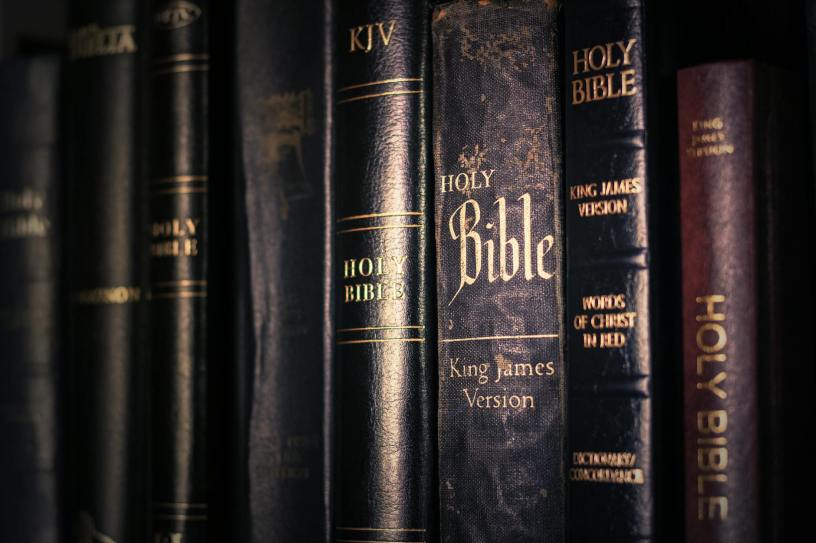
Barnes Commentary on Revelation: Chapter 1
1:1 – “The Revelation of Jesus Christ, which God gave Him to show His servants – things which must shortly take place. And He sent and signified it by His angel to His servant John,”
- The – in the Greek, it is “a Revelation”, not “the Revelation”. This is omitted because it is the title of a book, and because the use of the article might imply that this was the only revelation, excluding other books claiming to be a revelation; or it might imply some previous mention of the book, or knowledge of it in the reader. The simple meaning is, that this was “a Revelation;” it was only a part of the Revelation which God has given to mankind.
- Revelation = uncovering or removing the veil. It may be applied to the disclosing or manifesting of anything which was before obscure or unknown: (1) Through new instructions of things formerly not understood; (2) By an event itself; (3) By learning what is to come.
- God gave – Jesus must receive and depend on God to give this revelation (see Jn. 5:19-20; 8:28; 12:49; 14:10; 17:7-8; Mt. 11:27; Mk. 13:32; 1 Cor. 15:24-28)
- Show – to point out; to cause to see; to present to the sight
- His servants – Christians (1 Peter 2:16; Revelation 2:20; 7:3; 19:2; 22:3).
- Things which must shortly take place – Not ALL things that will take place. Not all things shown will shortly take place
- Must – implies that there is some kind of necessity that the event should occur.
- Shortly – The essential idea is, that the thing which is spoken of was soon to occur, or it was not a remote and distant event. There is the notion of rapidity, of haste, of suddenness. It is such a phrase as is used when the thing is on the point of happening, and could not be applied to an event which was in the remote future, considered as an independent event standing by itself. The same idea is expressed, in regard to the same thing, in Revelation 1:3: “the time is at hand” –\~o gar kairov egguv\~; that is, it is near; it is soon to occur…However, it must be concluded that the meaning here is not that ALL of the events will happen soon. Rather, the beginning of a long succession of events would happen soon.
- Signified – to indicate it by signs and symbols
- By his angel – The angel was the medium God used to communicate this to John (see Rev. 22:6,8-9). Angels are used throughout Scriptures as agents to convey God’s will (see Acts 7:53; Heb. 2:2; Gal. 3:19). It would seem that the agency of the angel was to cause those symbols to pass before the apostle.
- His servant – Like Paul in Rom. 1:1, John refers to himself as a servant.
1:2
- He regarded himself merely as a witness of what he had seen, and claimed only to make a fair and faithful record of it. John 21:24: “This is the disciple which testifieth (\~o marturwn\~) of these things, and wrote these things.” John 19:35: “And he that saw it bare record“–\~memarturhke\~. Compare also the following places, where the apostle uses the same word of himself: 1 John 1:2; 4:14.
- The phrase “the word of God”–\~ton logon tou yeou\~,–occurs frequently in the New Testament, (compare John 10:35; Acts 4:31; 6:2,7; 11:1; 12:24) and may either mean the word or doctrine respecting God –that which teaches what God is–or that which he speaks or teaches. It is more commonly used in the latter sense, compare the passages referred to above, and especially refers to what God speaks or commands in the gospel. The fair meaning of this expression would be, that John had borne faithful witness to, or testimony of, the truth which God had spoken to man in the gospel of Christ.
- Vitringa and others suppose that the reference here is to the gospel which he had published, and which now bears his name; Lucke and others, to the revelation made to him in Patmos, the record of which he now makes in this book; Professor Stuart and others, to the fact that he was a teacher or preacher of the gospel, and that (compare Revelation 1:9) the allusion is to the testimony which he had borne to the gospel, and for which he was an exile in Patmos. Is it not possible that these conflicting opinions may be to some extent harmonized, by supposing that in the use of the aorist tense–\~emarturhse\~–the writer meant to refer to a characteristic of himself, to wit, that he was a faithful witness of the word of God and of Jesus Christ, whenever and however made known to him ?…The meaning then of the expression “who bare record of the word of God,” as I understand it, is, that it was a characteristic of the writer to bear simple but faithful testimony to the truth which God communicated to men in the gospel.
- And of the testimony of Jesus Christ. That is, in accordance with the interpretation above, of the testimony which Jesus Christ bore for the truth; not of a testimony respecting Jesus Christ. The idea is, that Jesus Christ was himself a witness to the truth, and that the writer of this book was a witness merely of the testimony which Christ had borne…It is remarkable that, in confirmation of this view, John so often describes the Lord Jesus as a witness, or represents him as having come to bear his faithful testimony to the truth. Thus in Revelation 1:5: “And from Jesus Christ, who is the faithful and true witness.” John 8:18: “I am one that bear witness–\~o marturwn\~–of myself.” John 18:37: “To this end was I born, and for this cause came I into the world, that I should bear witness–\~ina marturhsw\~–to the truth.” Revelation 3:14: “These things saith the Amen, the faithful and true witness”– \~o martuv o pistov k.t.l.\~.
- And of all things that he saw…It is a general affirmation that he had always borne a faithful testimony to whatever he had seen respecting the word of God and the testimony of Christ. The correct rendering of the whole passage then would be, “And sending by his angel, he signifies it to his servant John, who bare record of” [i.e. whose character and office it was to bear his testimony to] “the word of God,” [the message which God has sent to me,] “and the testimony of Jesus Christ,” [the testimony which Christ bore to the truth,] “whatsoever he saw.” He concealed nothing; he held nothing back; he made it known precisely as it was seen by him. Thus interpreted, the passage refers to what was a general characteristic of the writer, and is designed to embrace all that was made known to him, and to affirm that he was a faithful witness to it.
1:3
- And hear the words of this prophecy…he general sense is, that they were to be regarded as highly favoured who became acquainted in any way with what is here communicated. The writer does not say that they were blessed who understood it, or that they who read or heard it would fully understand it; but it is clearly implied, that there would be so far an understanding of its meaning as to make it a felicitous condition to have been made acquainted with it. An author could not be supposed to say that one should regard his condition as a favoured one who merely heard words that he could not understand, or who had placed before him magnificent symbols that had to him no meaning. The word prophecy is used here in its more strict sense as denoting the disclosure of future events–a large portion of the book being of this nature. It is here synonymous with Revelation in Revelation 1:1.
- For the time is at hand. See Revelation 1:1. The word here used–\~egguv\~– has the same signification substantially as the word “shortly” in Revelation 1:1 It would apply to any event whose beginning was soon to occur, though the end might be remote, for the series of events might stretch far into the future…It may be inferred from this verse, that it is possible so to understand this book, as that it may convey useful instruction. This is the only book in the Bible of which a special blessing is pronounced on him who reads it; but assuredly a blessing would not be pronounced on the perusal of a book which is entirely unintelligible.
1:4
- Seven Churches…Professor Stuart (i. 219) supposes that “seven, and only so many, may have been named, because the sevenfold divisions and groups of various objects constitute a conspicuous feature in the Apocalypse throughout.” But this reason seems too artificial; and it can hardly be supposed that it would influence the mind of John, in the specification by name of the churches to which the book was sent. If no names had been mentioned, and if the statement had occurred in glowing poetic description, it is not inconceivable that the number seven might have been selected for some such purpose.
- Seven Spirits…As to his being represented as “before the throne,” this may be intended to designate the fact that the Divine Spirit was, as it were, prepared to go forth, or to be sent forth, in accordance with a common representation in the Scriptures, to accomplish important purposes on human affairs. The posture does not necessarily imply inferiority of nature, any more than the language does respecting the Son of God, when he is represented as being sent into the world to execute an important commission from the Father.
1:5
- From Jesus Christ…
Thus grace and peace are invoked from the infinite God in all his relations and operations :–as the Father, the Source of all existence; as the Sacred Spirit, going forth in manifold operations upon the hearts of men; and as the Son of God, the one appointed to bear faithful testimony to the truth respecting God and future events.
- Ruler over the kings of the earth…
As much of the revelations of this book pertained to the assertion of power over the princes and rulers of this world, there was a propriety that, in the commencement, it should be asserted that he who was to exert that power was invested with the prerogative of a ruler of the nations, and that he had this right of control.
- Washed us from our sins in His own blood…
The language is such as would be used only on the supposition that he had made an atonement, and that it was by the atonement that we are cleansed; for in what sense could it be said of a martyr that he “had washed us from our sins in his blood?” How could this language be used of Paul or Polycarp; of Ridley or Cranmer? The doctrine that the blood of Christ cleanses us from sin, or purifies us, is one that is common in the Scriptures. Compare 1 John 1:7; Hebrews 9:14. The specific idea of washing, however–representing that blood as washing sin away– is one which does not elsewhere occur. It is evidently used in the sense of cleansing or purifying, as we do this by washing, and, as the blood of Christ accomplishes in respect to our souls, what washing with water does in respect to the body.
1:7
- And all kindreds of the earth. Gr., “All the tribes–\~fulai\~–of the earth.” This language is the same which the Saviour uses in Matthew 24:30. See Barnes “Matthew 24:30“. The word tribes is that which is commonly applied to the twelve tribes of Israel, and thus used, it would describe the inhabitants of the holy land; but it may be used to denote nations and people in general, as descended from a common ancestor, and the connexion requires that it should be understood in this sense here, since it is said that “every eve shall see him;” that is, all that dwell on the face of the earth.
- Shall wail because of him. On account of him; on account of their treatment of him. The word rendered wail–\~koptw\~–means properly to beat, to cut; then to beat or cut one’s self in the breast as an expression of sorrow; and then to lament, to cry aloud in intense grief. The coming of the Saviour will be an occasion of this,
- Even so, Amen–\~nai, amhn\~. “A double expression of so be it, assuredly, certainly, one in Greek and the other in Hebrew.”–Professor Stuart. Compare Romans 8:16, “Abba, Father”– \~abba, o pathr\~. The idea which John seems to intend to convey is, that the coming of the Lord Jesus, and the consequences which he says will follow, are events which are altogether certain. This is not the expression of a wish that it may be so, as our common translation would seem to imply, but a strong affirmation that it will be so. In some passages, however, the word (\~nai\~) expresses assent to what is said, implying approbation of it as true, or as desirable. Matthew 11:26, “Even so, Father: for so it seemed good in thy sight.” Luke 10:21. So in Revelation 16:7, “Even so, (\~nai\~) Lord God Almighty.” So in Revelation 22:20, “Even so, (\~nai\~) come, Lord Jesus.” The word Amen here seems to determine the meaning of the phrase, and to make it the affirmation of a certainty, rather than the expression of a wish.
1:8
- These are the first and the last letters of the Greek alphabet, and denote properly the first and the last. So in Revelation 22:13, when the two expressions are united, “I am Alpha and Omega, the beginning and the end, the first and the last.” So in Revelation 1:17, the speaker says of himself, “I am the first and the last.” Among the Jewish Rabbins, it was common to use the first and the last letters of the Hebrew alphabet to denote the whole of anything, from beginning to end.
- Compare Isaiah 41:4, “I the Lord, the first, and with the last;’– Isaiah 44:6, “I am the first, and I am the last; and beside me there is no God;”–Isaiah 48:12, “I am he; I am the first, I also am the last.” There can be no doubt that the language here would be naturally understood as implying divinity, and it could be properly applied to no one but the true God.
- There is no real incongruity in supposing, also, that the writer here meant to refer to God as such, since the introduction of a reference to him would not be inappropriate to his manifest design. Besides, a portion of the language here used, “which is, and was, and is to come,” is that which would more naturally suggest a reference to God as such, than to the Lord Jesus Christ. See Revelation 1:4.
- The object for which this passage referring to the “first and the last–to him who was, and is, and is to come,” is introduced here evidently is, to show that as he was clothed with omnipotence, and would continue to exist through all ages to come as he had existed in all ages past, there could be no doubt about his ability to execute all which it is said he would execute.
- The Almighty. An appellation often applied to God, meaning that he has all power, and used here to denote that he is able to accomplish what is disclosed in this book.
1:9
- It is commonly supposed that John was banished to this island by Domitian, about A.D. 94. No place could have been selected for banishment which would accord better with such a design than this. Lonely, desolate, barren, uninhabited, seldom visited, it had all the requisites which could be desired for a place of punishment, and banishment to that place would accomplish all that a persecutor could wish in silencing an apostle, without putting him to death. It was no uncommon thing in ancient times to banish men from their country; either sending them forth at large, or specifying some particular place to which they were to go. The whole narrative leads us to suppose that this place was designated as that to which John was to be sent. Banishment to an island was a common mode of punishment; and there was a distinction made by this act in favour of those who were thus banished. The more base, low, and vile of criminals were commonly condemned to work in the mines; the more decent and respectable were banished to some lonely island. See the authorities quoted in Wetstein, in loc.
1:10
- the word Spirit may refer either to the Holy Spirit, or to some state of mind such as the Holy Spirit produces–a spirit of elevated devotion; a state of high and uncommon religious enjoyment. It is clear that John does not mean here to say that he was under the influence of the Holy Spirit in such a sense as that he was inspired, for the command to make a record, as well as the visions, came subsequently to the time referred to. The fair meaning of the passage is, that he was at that time favoured in a large measure with the influences of the Holy Spirit–the spirit of true devotion; that he had a high state of religious enjoyment, and was in a condition not inappropriate to the remarkable communications which were made to him on that day.
- The state of mind in which he was at the time here referred to, is not such as the prophets are often represented to have been in when under the prophetic inspiration, compare Ezekiel 1:1; 8:3 Ezekiel 40:2; Jeremiah 24:1 and which was often accompanied with an entire prostration of bodily strength, compare Numbers 24:4; Ezekiel 1:28; Daniel 10:8-10 1 Samuel 19:24; Revelation 1:17 but such as any Christian may experience when in a high state of religious enjoyment.
- an illustration of the great truth that God can meet his people anywhere; that, when in solitude and in circumstances of outward affliction, when persecuted and cast out, when deprived of the public means of grace and the society of religious friends, he can meet them with the abundant consolations of his grace, and pour joy and peace into their souls. This state was not inappropriate to the revelations which were about to be made to John, but this itself was not that state.
- As of a trumpet. Loud as a trumpet. This is evidently the only point in the comparison. It does not mean that the tones of the voice resembled a trumpet, but only that it was clear, loud, and distinct like a trumpet. A trumpet is a well-known wind instrument distinguished for the clearness of its sounds, and was used for calling assemblies together, for marshalling hosts for battle, etc. The Hebrew word employed commonly to denote a trumpet–\^HEBREW\^ shophar–means bright and clear, and is supposed to have been given to the instrument on account of its clear and shrill sound, as we now give the name “clarion” to a certain wind instrument. The Hebrew trumpet is often referred to as employed, on account of its clearness, to summon people together, Exodus 19:13; Numbers 10:10; Judges 7:18; 1 Samuel 13:3; 2 Samuel 15:10.
1:11
- Though Patmos was a lonely and barren place, and though probably there were few or no inhabitants there, yet there is no improbability in supposing that John could have found writing materials there, nor even that he may have been permitted to take such materials with him. He seems to have been banished for preaching, not for writing; and there is no evidence that the materials for writing would be withheld from him. John Bunyan in Bedford jail found materials for writing the Pilgrim’s Progress; and there is no evidence that the apostle John was denied the means of recording his thoughts when in the island of Patmos.
- The word book here–\~biblion\~–would more properly mean a roll or scroll, that being the form in which books were anciently made.
- He was to send all that he should “see;” to wit, all that is recorded in this volume or book of “Revelation.” Part of this (chapters 2-3) would appertain particularly to them; the remainder (chapters 4-22) would appertain to them no more than to others, but still they would have the common interest in it which all the church would have, and, in their circumstances of trial, there might be important reasons why they should see the assurance that the church would ultimately triumph over all its enemies. They were to derive from it themselves the consolation which it was fitted to impart in time of trial, and to transmit it to future times for the welfare of the church at large.
- Unto Ephesus. Perhaps mentioned first as being the capital of that portion of Asia Minor; the most important city of the seven; the place where John had preached, and whence he had been banished.
1:12
- And being turned, I saw seven golden candlesticks. These were the first things that met his eye.
- The word rendered candlesticks –\~lucnia\~–means properly a light-stand; lamp-stand;–something to bear up a light. It would be applied to anything that was used for this purpose; and nothing is intimated, in the use of the word, in regard to the form or dimensions of the light-bearers.
- is not improbable that, as they were designed to represent the seven churches of Asia, they were arranged in an order resembling these churches. The scene is not laid in the temple, as many suppose, for there is nothing that resembles the arrangements in the temple except the mere fact of the lights.
- Light is often used in the Scriptures as an emblem of true religion; Christians are represented as “the light of the world,” (Matthew 5:14) compare (Philippians 2:15; John 8:12) and a Christian church may be represented as a light standing in the midst of surrounding darkness.
1:13
- With a golden girdle. Either wholly made of gold, or more probably richly ornamented with gold. This would naturally suggest the idea of one of rank–probably one of princely rank. The raiment here assumed was not that of a priest, but that of a king.
1:14
- Professor Stuart supposes that this means, not that his hairs were literally white, as if with age, which he says would be incongruous to one just risen from the dead, clothed with immortal youth and rigour, but that it means radiant, bright, resplendent–similar to what occurred on the transfiguration of the Saviour, Matthew 17:2.
- But to this it may be replied
- (a) that this would not accord well with that with which his hair is compared–snow and wool, particularly the latter.
- (b) The usual meaning of the word is more obvious here, and not at all inappropriate. The representation was fitted to signify majesty and authority; and this would be best accomplished by the image of one who was venerable in years. Thus in the vision that appeared to Daniel, (Daniel 7:9) it is said of him who is there called the “Ancient of Days,” that his “garment was white as snow, and the hair of his head like the pure wool.” It is not improbable that John had that representation in his eye, and that therefore he would be impressed with the conviction that this was a manifestation of a Divine person.
- Such a representation is not uncommon. We speak of a lightning glance, a fiery look, etc. In Daniel 10:6, it is said of the man who appeared to the prophet on the banks of the river Hiddekel, that his eyes were “as lamps of fire.”
1:15
- The kind of metal here referred to, however, would seem to be some compound of brass–of a whitish and brilliant colour.
- Voice as the sound of many waters…This comparison often occurs in the Scriptures. See Ezekiel 43:2, “And behold the glory of the God of Israel came from the east: and his voice was like the sound of many waters: and the earth shined with his glory.” So Revelation 14:2; 19:6. Compare Ezekiel 1:24 Daniel 10:6.
1:16
- The two edges were designed to cut both ways; and such a sword is a striking emblem of the penetrating power of truth, or of words that proceed from the mouth; and this is designed undoubtedly to be the representation here-that there was some symbol which showed that his words, or his truth, had the power of cutting deep, or penetrating the soul. So in Isaiah 49:2 it is said of the same personage, “And he hath made my mouth like a sharp sword.”…So in Hebrews 4:12, “The word of God is quick and powerful, sharper than any two-edged sword,” etc.
- There could be no more striking description of the majesty and glory of the countenance than to compare it with the overpowering splendour of the sun.
- This closes the description of the personage that appeared to John. The design was evidently to impress him with a sense of his majesty and glory, and to prepare the way for the authoritative nature of the communications which he was to make…The appearance assumed is, evidently, in accordance with various representations of God as he appeared to Ezekiel, to Isaiah, and to Daniel–that which was a suitable manifestation of a Divine being–of one clothed in the majesty and power of God.
1:17
- the subsequent revelations of this Divine personage would rather seem to imply that John did not at once recognise him as the Lord Jesus. The effect here described is one that often occurred to those who had a vision of God. See Daniel 8:18, “Now as he was speaking with me, I was in a deep sleep on my face toward the ground: but he touched me, and set me upright.” Daniel 8:27, “And I Daniel fainted, and was sick certain days; afterward I rose up, and did the king’s business.” Compare Exodus 33:20; Isaiah 6:5; Ezekiel 1:28; 43:3; Daniel 10:7-9,17.
- And he laid his right hand upon me. For the purpose of raising him up. Compare Daniel 8:18, “He touched me, and set me upright.” We usually stretch out the right hand to raise up one who is fallen.
- I am the first and the last. See Barnes “Revelation 1:8“. This is stated to be one of the reasons why he should not fear–that he was eternal: “I always live–have lived through all the past, and will live through all which is to come–and therefore I can accomplish all my promises, and execute all my purposes.”
1:18
- I am he that liveth, and was dead…This also is given as a reason why John should not fear; and nothing would allay his fears more than this. He now saw that he was in the presence of that Saviour whom more than half a century before he had so tenderly loved when in the flesh, and whom, though now long absent, he had faithfully served, and for whose cause he was now in this lonely island. His faith in his resurrection had not been a delusion; he saw the very Redeemer before him who had once been laid in the tomb.
- The word rendered hell– \~adhv\~, hades–refers properly to the under world; the abode of departed spirits; the region of the dead. This was represented as dull and gloomy; as enclosed with walls; as entered through gates which were fastened with bolts and bars…To hold the key of this, was to hold the power over the invisible world. It was the more appropriate that the Saviour should represent himself as having this authority, as he had himself been raised from the dead by his own power, (compare John 10:18) thus showing that the dominion over this dark world was entrusted to him.
1:19
- And the things which are. Give an account of those things which thou hast seen as designed to represent the condition of the seven churches. He had seen not only the Saviour, but he had seen seven lamp-stands, and seven stars in the hand of the Saviour, and he is now commanded to record the meaning of these symbols as referring to things then actually existing in the seven churches.
1:20
- It is evidently implied that the meaning of these symbols would be beyond the ordinary powers of the human mind to arrive at with certainty, and hence John was directed to explain the symbol. The general and obvious truths which they would serve to convey would be that the ministers of the churches, and the churches themselves, were designed to be lights in the world, and should burn clearly and steadily. Much important truth would be couched under these symbols, indeed, if nothing had been added in regard to their signification as employed here by the Saviour; but there were particular truths of great importance in reference to each of these “stars” and “lamp-bearers,” which John was more fully to explain.
- The angels of the seven churches…The evident meaning, however, is, that what was recorded should be directed to them not as pertaining to them exclusively as individuals, but as presiding over, or representing the churches, for what is recorded pertains to the churches, and was evidently designed to be laid before them. It was for the churches, but was committed to the “angel” as representing the church, and to be communicated to the church under his care.
- If the word does not mean literally an angel; if it does not refer to messengers sent to John in Patmos by the churches; and if it does not refer to a prelatical bishop, then it follows that it must refer to some one who presided over the church as its pastor, and through whom a message might be properly sent to the church. Thus understood, the pastor or “angel” would be regarded as the representative of the church; that is, as delegated by the church to manage its affairs…The conclusion, then, to which we have come is, that the “angel of the church” was the pastor, or the presiding presbyter in the church; the minister who had the pastoral charge of it, and who was therefore a proper representative of it.
Gill’s Commentary on Revelation
Chapter 1
1:1 – “The Revelation of Jesus Christ, which God gave Him to show His servants – things which must shortly take place. And He sent and signified it by His angel to His servant John,”
- Revelation of Jesus Christ – Either referring to Christ as the Author, or Christ as the subject, or Christ was the first one to whom it was revealed
1:2
- and of all things that he saw;
with his bodily eyes, as the human body of Christ, the miracles he wrought in it, the transfiguration of it on the mount, the crucifixion of it, and the piercing of it with a spear, and the resurrection of it from the dead; and also the visions recorded in this book; and such a faithful witness serves greatly to confirm the authority of this book, and to recommend the perusal of it.
1:3
- Blessed [is] he that readeth…
may allude to the reading of the law and the prophets in the synagogues, which were not barely read, but expounded; see (Acts 13:15) (15:21) ; and the rather this may be thought to be the sense of the words, since there is a change of number in the next clause,
1:5
- And from Jesus Christ…
Who, though the second Person in the Trinity, is mentioned last, because many things were to be said of him; and who is described in all his offices: in his prophetic office, - the faithful witness;
he is described in his priestly office by
- the first begotten of the dead:
This character supposes that he died, as he did, for the sins of his people; and that he rose again from the dead, as he did, for their justification; and that he rose first as their head and representative, and opened the way of life for them. And he is described in his kingly office, for it follows,
- and the Prince of the kings of the earth:
- and washed us from our sins in his own blood;
which shows that these persons were loved before washed; they were not first washed, and then loved, but first loved, and then washed. Love was the cause of washing, and not washing the cause of love; hence it appears that they were in themselves filthy, and unclean through sin; and that they could not cleanse themselves by anything they could do; and that such was the love of Christ to them, that he shed his precious blood for them, which is a fountain opened, to wash in for sin, and which cleanses from all sin. This is to be understood, not of the sanctification of their natures, which is the work of the Spirit, but of atonement for their sins, and justification from them by the blood of Christ, whereby they are so removed, that they are all fair, and without spot. It is afterwards said, that these same persons are made priests; and it may be observed, that the priests were always washed, before they performed their service, as such
1:7
- Behold he cometh with clouds…
John carries on the account of Christ in his kingly office, one branch of which is to execute judgment; and describes him by a future coming of his, which cannot be understood of his coming to take vengeance on the Jews, at the time of Jerusalem’s destruction, though that is sometimes expressed in such language, and with such circumstances, as here; see (Matthew 24:30) (26:64) ; because if this revelation was made to John, in the latter end of Domitian’s reign, as is commonly reported by the ancients, and in the year 95 or 96, as chronologers generally place it, it must be upwards of twenty years after the destruction of Jerusalem, and therefore cannot relate to that; nor to his coming in a spiritual sense to convert the Jews in the latter day; for this coming is personal, and with clouds, when he will be seen by every eye; all which circumstances do not so well agree with that; besides, all the kindreds of the earth will not lament on that account: the wicked will take little notice of it, the tribes of the Jews will rejoice at it, and so will all the converted Gentiles: it is better therefore to understand this of Christ’s second coming to judge the quick and dead, which is represented as just at hand, to denote the certainty of it; and a “behold” is prefixed to it, to excite attention, and to denote the importance of it: … The manner of his coming will be “with clouds”; either figuratively, with angels, who will attend him both for grandeur and service, or literally, in the clouds of heaven; he shall descend in like manner as he ascended, and as Daniel prophesied he should, (Daniel 7:13) . Hence, one of the names of the Messiah, with the Jews, is, (ynne) , “Anani” F18, which signifies “clouds”; and his coming is so described, both to denote the grand and magnificent manner, in which he will come, making the clouds his chariots; and to strike terror into his enemies, clouds and darkness being about him, thunder and lightning breaking out of them, as tokens of that vengeance he comes to take upon them; as also the visibility of his coming, he shall descend from the third heaven, where he now is, into the airy heaven, and sit upon the clouds, as on his throne, and be visible to all: hence it follows, and every eye shall see him; - And they [also] which pierced him;
his hands, feet, and side, when they crucified him; both the Roman soldiers, who actually did it, and the body of the Jewish nation, the rulers and common people, who consented to it, and at whose instigation it was done; these, being raised from the dead, shall see him with their bodily eyes, whom they so used. - even so, Amen,
says John, and so say all true believers; what the wicked lament, they rejoice at; they desire the coming of Christ, they love it, look and long for it; they believe it shall be, and wish it may be quickly, as in (Revelation 22:20) ; This expression of faith in, and desire after the coming of Christ, is signified by two words, the one Greek and the other Hebrew; suggesting, that this is an article of faith among all the saints of all nations, Jews and Gentiles, and is what they are wishing and waiting for.
1:8
- Alpha is the first letter, and Omega the last in the Greek alphabet, and signifies that Christ is the first and the last, as it is interpreted in (Revelation 1:11,17) , and is a character often given to the divine Being in prophetic writings; see (Isaiah 41:4) (44:6) (48:12) ; and is no small proof of the proper deity of Christ.
1:9
- though he was an elder, an evangelist, yea, an apostle by office, yet he puts himself on a level with the several members of these churches, as he was a believer in Christ:
- Ignatius says {w}, John (efugadeueto) , “was banished to Patmos”: by Domitian emperor of Rome, as Irenaeus says F24, at the latter end of his reign, about the year 95 or 96; and, as Tertullian F25 after he had been cast into a vessel of flaming oil, where he got no hurt
1:10
- I was in the Spirit on the Lord’s day…
Not on the Jewish sabbath, which was now abolished, nor was that ever called the Lord’s day, and had John meant that, he would have said on the sabbath day; much less the Jewish passover, but the first day of the week is designed; so the Ethiopic version renders it “on the first day”; and is so called just as the ordinance of the supper is called the Lord’s supper, being instituted by the Lord, and the Lord’s table, (1 Corinthians 10:21) (11:20) , and that because it was the day in which our Lord rose from the dead, (Mark 16:9) ; and in which he appeared at different times to his disciples, (John 20:19,26) , and which the primitive churches set apart for his worship and service, and on which they met together to hear the word, and attend on ordinances, (Acts 20:7) (1 Corinthians 16:1)… Justin Martyr F26 tells us, who lived within about fifty years after this time, that on the day called (th tou) (hliou hmera) , “Sunday”, (by the Greeks,) the Christians met together in one place, and read the Scriptures, and prayed together, and administered the ordinance of the supper; and this, he adds, was the first day in which God created the World, and our Saviour Jesus Christ rose from the dead; yea, Barnabas F1, the companion of the Apostle Paul, calls this day the eighth day, in distinction from the seventh day sabbath of the Jews, and which he says is the beginning of another world; and therefore we keep the eighth day, adds he, joyfully, in which Jesus rose from the dead, and being manifested, ascended unto heaven: and this day was known by the ancients by the name of “the Lord’s day”; as by Ignatius F2, Irenaeus F3, Tertullian F4, Origen F5, and others; for it must be some day that was known by this name, otherwise it is mentioned to no purpose, because it would not be distinctive from others; for which reason it cannot merely design the day in which John saw this vision, because the Lord appeared on it to him, for this would not distinguish it from any other day. Some have conjectured that this was not the weekly Lord’s day observed by the Christians, but the anniversary of Christ’s resurrection; and so the Ethiopians still call Easter “Schambatah Crostos”, the sabbath of Christ: to understand it of the former is best. - and heard behind me a great voice, as of a trumpet;… it was behind him, as in (Isaiah 30:21)… had it been a low muttering voice, it might be questioned whether John rightly understood it, and whether he might not be mistaken in the account of what he heard; but it being so loud and clear, there is no room for such a doubt.
- and, what thou seest, write in a book;
that it might remain, and be read of all men, and be profitable to the churches in the then present age, and in all future ones:
1:12
- and being turned, I saw seven golden candlesticks;
which represented the seven churches, (Revelation 1:20) ; in allusion to the seven lamps in the candlestick of the sanctuary, (Exodus 25:37) (Zechariah 4:2) ; compared to “candlesticks”, for the use of them, which is to hold forth light; these have none of themselves, but what is put into them, and being put into them, they hold it forth; so the churches of Christ have no light of themselves, but what is put into them; and the light which is put into them, is not the mere light of nature, nor the law of Moses, but the Gospel of Christ - they are compared to “golden” candlesticks, because of their excellency, preciousness, and value, in the esteem of Christ; and for their brightness and purity in doctrine, discipline, and life; and for their splendour, glory, and beauty; and for their stability and duration; and though they are liable to corruption and taint, yet may be melted, refined, and purified as gold.
1:13
- Christ was seen by John in the midst of the candlesticks or churches, and among whom he walked, as in (Revelation 2:1) ; which is expressive of his presence in his churches, and which he has promised unto the end of the world; and of the gracious visits he makes them, and the sweet communion and conversation he indulges them with, to their joy and comfort; as well as the walks he takes among them for his own delight and pleasure
- clothed with a garment down to the foot;
which some understand of the righteousness of Christ; this is called a garment, a wedding garment, the best or first robe, the robe of righteousness; and is fitly compared to one, it being unto, and upon believers, put upon them, and which covers their persons, keeps them warm and comfortable, and beautifies and adorns them; and is a very beautiful, pure, and spotless robe; and reaches to the feet, covers all the members of Christ’s mystical body, the meanest and lowest, as well as the more excellent; the weakest believer as well, and as much, as the strongest - it seems rather to design a priestly robe…in the habit of a priest did Christ now appear; and so he is described in his priestly office, in the midst of his churches, having made atonement for their sins by the sacrifice of himself; and now as their high priest had entered into the holiest of all with his own blood and righteousness; bore their names on his breastplate, appeared in the presence of God on their account, and ever lived to make intercession for them
- Christ’s girdle, as a King, is the girdle of faithfulness and righteousness, which is about his loins; and his girdle, as a prophet, is the girdle of truth; but, as a priest, it is the girdle of love; it is that which has constrained him to put himself in the room and stead of his people, to assume their nature, give himself a sacrifice for them, and intercede on their behalf: this is like a girdle, round from everlasting to everlasting; is said to be “golden”, because of the excellency, purity, glory, and duration of it; and because it is very strong, affectionate, and hearty, it is hid to be a girdle about the paps, near where is the heart, the seat of love; and this may also denote the power, strength, and readiness of Christ to assist and help his churches in every time of need.
1:14
- these metaphors are expressive of the antiquity of Christ, who is the everlasting Father, and whose goings forth were of old, even from everlasting; and of his senile gravity and prudence, for with the Ancient is wisdom; he is the wisdom of God, in whom all the treasures of wisdom and knowledge are hid; and also of his glory and majesty, being the brightness of his Father’s glory; and likewise of his true and proper deity, since this description is the same with that of the Ancient of days in (Daniel 7:9)
1:15
- either the power of Christ in bearing up and supporting his people, in the care and government and defence of them; or his ways, works, and walks in his churches, and all his providential administrations towards them, which are holy, just, and righteous, and will be manifest; or his wrath and vengeance in treading down and trampling upon his enemies:
- and his voice as the sound of many waters;
meaning his Gospel, as preached by his apostles and ministers, which was heard far and near; see (Romans 10:18) ; and which made a great noise in the world; or his voice of vengeance on his enemies, which will be very terrible and irresistible.
1:16
- These are led and held in Christ’s right hand; which shows that they are dear unto him, and highly valued by him; that they are his, in his possession, at his dispose, whom he uses as his instruments to do his work; and whom he upholds and sustains, that they shall not sink under their burdens; and whom he preserves from failing
- a twoedged one; and by its two edges may be meant law and Gospel; the law lays open the sins of men, fills with grief and anguish for them, yea, not only wounds, but kills; and the Gospel cuts down the best in man, his wisdom, holiness, righteousness, and carnal privileges, in which he trusts; and the worst in man, teaching him to deny ungodliness and worldly lusts
- or this may mean the judiciary sentence of Christ upon the wicked, which will be a fighting against them, and a smiting of the nations of the world; see (Revelation 2:16) (19:15) (Psalms 149:6)
1:17
- the appearance of a divine person in any degree of majesty and glory, has had some considerable effect upon men, even upon the best of men; but John seems to be more affected with it than any, as the vision was the more grand and illustrious: Manoah was afraid he should die, but did not fall down as dead; Ezekiel fell upon his face, but had his senses; Daniel’s comeliness turned into corruption, and he retained no strength, he fainted, and fell into a deep sleep; see (Judges 13:22) (Ezekiel 1:28) (Daniel 10:8,9) ; but John fell down at once, as dead. This panic which good men were seized with, at any more than ordinary appearance of God, or apprehension of his presence, arose from a notion that present death ensues a sight of him; hence Jacob wonders, and is thankful, that he had seen God face to face, and yet his life was preserved, (Genesis 32:30) ; and such an effect as here, upon the body, any uncommon discovery of the divine Being has, partly through the weakness of human nature, which in its present circumstances is not able to bear the rays and glories of a divine person; hence the resurrection of the body in power, glory, and immortality, incorruption and spirituality, is necessary to the enjoyment of God and Christ in a state of bliss and happiness to all eternity; and partly through a consciousness of sin, which ever since the fall of Adam has occasioned fear and perturbation of mind, even in the best of saints, when they have had any sense of the divine Majesty being near, in an unusual form of glory:
- he laid not his hand on him in wrath and angers, but in love; and in order to raise him up and revive his spirits, and remove his fears; hence the Ethiopic version renders it, “and he took hold on me with his right hand, and lifted me up”; as he does all who in a spiritual sense fall at his feet; it is always safe and comfortable falling there
- I am the first and the last;
a way of speaking used by God when he is about to comfort his people, and remove their fears; see (Isaiah 41:4) (44:6) (48:12) ; and is used by Christ for the same purpose here
1:18
- and behold I am alive for evermore, Amen;
he was always alive as God, or he was always the living God, and ever will be; and he is now alive as man, and will for ever continue so - his power over death is seen in taking away persons by death when he pleases, the instances of Ananias and Sapphira are proofs of this; and in delivering persons from death when near it, as the centurion’s servant, Peter’s wife’s mother, and the nobleman’s son of Capernaum; and in raising persons from the dead, as Jairus’s daughter, the widow of Naam’s son, and Lazarus, when he was here on earth; and in his raising up his own body when dead, and which will also appear in raising all the dead at the last day
- and his power over “hell”, by which may be meant the grave, or the place of the departed, and separate souls, or the place of the damned and of the devils which are there, will be seen in opening the graves at the time of the resurrection, when death and hell, or the grave, will deliver up the dead in them, at his command; and in retaining or sending out the separate souls “in hades”; and in opening the doors of hell, and casting in the wicked, and destroying them, soul and body, there; and in shutting them up, that they cannot come out from thence who are once in
1:20
- the seven stars which John saw in Christ’s right hand, represent the angels, or pastors of the seven churches of Asia, and in them all the pastors and ministers of the churches in all the periods of time until Christ’s second coming.
- and the seven candlesticks which thou sawest are the seven churches;
represent the seven churches, of Asia, and in them all the churches of Christ, in successive ages, to the end of time; the reasons why these are signified by “candlesticks”, (See Gill on 1:12); and that they are prophetic of the churches of Christ in the several periods of time, until he comes again, will appear from the following considerations: the whole book is called a prophecy, and a revelation of things that were shortly to come to pass, and it would be very strange, and very unsuitable to its title, should the three first chapters contain nothing prophetic in them; the characters of the divine Person under which these seven churches are saluted, as he which is, and was, and is to come, the Alpha and Omega, the first and the last, show that the things written to them belong to the Gospel church state, from the beginning to the end of it, for what other reason can be given for such a peculiar use of them? the very grand and illustrious appearance of Christ, antecedent to these epistles, when compared with the appearance of God, previous to the opening of the sealed book, and the seven seals of it, may induce one to conclude, that as the latter introduces the book prophecy in this revelation, so the former introduces the church prophecy; nor does it seem that such a magnificent appearance is necessary to the bare sending of some letters of advice to some particular churches: moreover, as there are some things in these epistles too common to all the churches and ministers to be restrained to some particular ones, such as Christ’s affording his presence among them, signified by his walking amidst the candlesticks, and his care of, and respect unto the ministers of the Gospel, expressed by holding seven stars in his right hand; for can it be thought that Christ only granted his presence to the seven churches in Asia? or that the pastors of those churches were the only ones Christ holds in his right hand? so there are others too particular to certain periods to belong to those churches, as that Smyrna should have a crown of life, Pergamos hidden manna and a white stone, Thyatira the morning star, and Philadelphia be delivered from a temptation that would reach all the world, and is not yet come; for which no reason can be given in the literal sense of these epistles; and it is strange that only seven churches should be sent to, and these only in Asia; why not to the churches in Africa and Europe? and these churches also, all but Ephesus, very obscure ones; why not to the churches at Antioch, Corinth, Rome… and it is stranger still, if, as Epiphanius says {w}, there was no church at Thyatira till after the writing of these letters: nothing can account for all this but their being prophetic, there being something in the number, names, situation, and case of these churches, which were emblematical of the state of the church in successive periods of time; to which may be added, that the epiphonema at the close of every epistle, “he that hath an ear, let him hear what the Spirit saith unto the churches”, shows that each epistle to every church is not designed for that church only, but for churches; and for what churches but for those who are represented in that period of time, since they must be unsuitable to one another? and besides, this concluding sentence shows, that what is contained in each epistle is something intricate, abstruse, and parabolical, it being only used when some such thing is delivered; see (Matthew 11:15) (13:9,43) .
Geneva Study Bible Commentary on Revelation Chapter 1
1:4
This Spirit is one in person according to his subsistence: but in communication of his power, and in demonstration of his divine works in those seven churches, perfectly manifests himself as if there were many spirits, every one perfectly working in his own church. Which is why in (Revelation 5:6) they are called the seven horns and seven eyes of the Lamb, as if to say, as his most absolute power and wisdom. In (Revelation 3:1) Christ is said to have those seven spirits of God, and in (Revelation 4:5) it is said that seven lamps burn before his throne, which also are those seven spirits of God. That this place ought to be so understood, it is thus proved. For first, grace and peace is asked by prayer from this Spirit, which is a divine work, and an action incommunicable in respect to God. Secondly, he is placed between the Father and the Son, as set in the same degree of dignity and operation with them, besides, he is before the throne, as of the same substance with the Father and the Son: as the seven eyes and seven horns of the Lamb. Moreover, these spirits are never said to adore God, as all other things are. Finally, this is the power by which the Lamb opened the book, and loosed the seven seals of it, when no one could be found among all creatures by whom the book might be opened (Revelation 5:1-10); Of these things long ago Master John Luide of Oxford wrote to me. Now the Holy Spirit is named before Christ because a long speech about Christ follows.
- These are the seven spirits, which are later called the horns and eyes of the Lamb in (Revelation 5:6) and are now acting as a guard waiting on God.
1:8
6 I am f Alpha and Omega
- (f) I am he before whom there was nothing, indeed, by whom everything that is made, was made: and I shall remain though everything else should perish.
1:10
- The proposition shows, in (Revelation 1:9) first who was called to this revelation, in what place, and how occupied. Then at what time, and by what means, namely, by the Spirit and the word, and that on the Lord�s day, which ever since the resurrection of Christ, was consecrated for Christians
1:12
- The description of the Author, who is Christ: by the candlesticks that stand about him, that is, the churches that stand before him, and depend upon his direction.
1:14
- ancient gravity and most excellent sight of the eye.
1:15
- In (Revelation 1:15) he is described with strength invincible and with a mighty word
1:17
- A religious fear, that goes before the calling of the saints, and their full confirmation to take on them the vocation of God.
1:19
- The sum of this prophecy, that the apostle must write whatever he sees, adding nothing, nor taking away anything (Revelation 1:2). Here there are two parts: one is a narration of those things which are, that is, which then were at that time, contained in the second and third chapter: the other part is of those things which were to come, contained in the rest of this book.
1:20
- By angels he means the ministers of the Church.
Jamieson, Fausset and Brown’s Commentary on Revelation: Chapter 1
1:1 – “The Revelation of Jesus Christ, which God gave Him to show His servants – things which must shortly take place. And He sent and signified it by His angel to His servant John,”
- Revelation – an apocalypse or unveiling of those things which had been veiled. A manifesto of the kingdom of Christ. The travelling manual of the Church for the Gentile Christian times. Not a detailed history of the future, but a representation of the great epochs and chief powers in developing the kingdom of God in relation to the world. In this book all the other books of the Bible end and meet: in it is the consummation of all previous prophecy. Daniel foretells as to Christ and the Roman destruction of Jerusalem, and the last Antichrist. But John’s Revelation fills up the intermediate period, and describes the millennium and final state beyond Antichrist. Daniel, as a godly statesman, views the history of God’s people in relation to the four world kingdoms. John, as an apostle, views history from the Christian Church aspect. The term Apocalypse is applied to no Old Testament book. Daniel is the nearest approach to it; but what Daniel was told to seal and shut up till the time of the end, John, now that the time is at hand (Re 1:3), is directed to reveal.
- Of Jesus Christ – Christ taught many things before His departure; but those which were unsuitable for announcement at that time He brought together into the Apocalypse [BENGEL]. Compare His promise, Joh 15:15, “All things that I have heard of My Father, I have made known unto you”; also, Joh 16:13, “The Spirit of truth will show you things to come.” The Gospels and Acts are the books, respectively, of His first advent, in the flesh, and in the Spirit; the Epistles are the inspired comment on them. The Apocalypse is the book of His second advent and the events preliminary to it.
- His servants – not merely to “His servant John,” but to all His servants (compare Re 22:3).
- Shortly – Not that the things prophesied were according to man’s computation near; but this word “shortly” implies a corrective of our estimate of worldly events and periods. The Gentile Church needs to be reminded of the transitoriness of the world (which it is apt to make its home) and the nearness of Christ’s advent. On the one hand Revelation says, “the time is at hand”; on the other, the succession of seals, &c., show that many intermediate events must first elapse.
- By his angel – The angel does not come forward to “signify” things to John until Re 17:1; 19:9, 10. Previous to that John receives information from others. Jesus Christ opens the Revelation, Re 1:10, 11; 4:1; in Re 6:1 one of the four living creatures acts as his informant; in Re 7:13, one of the elders; in Re 10:8, 9, the Lord and His angel who stood on the sea and earth. Only at the end (Re 17:1) does the one angel stand by Him (compare Da 8:16; 9:21; Zec 1:19).
1:2
- bare record of — The word of God constitutes his testimony; Re 1:3, “the words of this prophecy.”
1:3
- he that readeth, and they that hear–namely, the public reader in Church assemblies, and his hearers. In the first instance, he by whom John sent the book from Patmos to the seven churches, read it publicly: a usage most scriptural and profitable. A special blessing attends him who reads or hears the apocalyptic “prophecy” with a view to keeping the things therein (as there is but one article to “they that hear and keep those things,” not two classes, but only one is meant: “they who not only hear, but also keep those things,” Ro 2:13); even though he find not the key to its interpretation, he finds a stimulus to faith, hope, and patient waiting for Christ.
1:4
- seven churches–not that there were not more churches in that region, but the number seven is fixed on as representing totality. These seven represent the universal Church of all times and places. See TRENCH’S [Commentary on the Epistles to the Seven Churches in Asia] interesting note, Re 1:20, on the number seven. It is the covenant number, the sign of God’s covenant relation to mankind, and especially to the Church. Thus, the seventh day, sabbath (Ge 2:3; Eze 20:12). Circumcision, the sign of the covenant, after seven days (Ge 17:12). Sacrifices (Nu 23:1; 14:29; 2Ch 29:21). Compare also God’s acts typical of His covenant (Jos 6:4, 15, 16; 2Ki 5:10). The feasts ordered by sevens of time (De 15:1; 16:9, 13, 15). It is a combination of three, the divine number (thus the Trinity: the thrice Holy, Isa 6:3; the blessing, Nu 6:24-26), and four the number of the organized world in its extension (thus the four elements, the four seasons, the four winds, the four corners or quarters of the earth, the four living creatures, emblems of redeemed creaturely life, Re 4:6; Eze 1:5, 6, with four faces and four wings each; the four beasts and four metals, representing the four world empires, Da 2:32, 33; 7:3; the four-sided Gospel designed for all quarters of the world; the sheet tied at four corners, Ac 10:11; the four horns, the sum of the world’s forces against the Church, Zec 1:18). In the Apocalypse, where God’s covenant with His Church comes to its consummation, appropriately the number seven recurs still more frequently than elsewhere in Scripture.
- him which is . . . was . . . is to come–a periphrasis for the incommunicable name JEHOVAH, the self-existing One, unchangeable. In Greek the indeclinability of the designation here implies His unchangeableness. Perhaps the reason why “He which is to come” is used, instead of “He that shall be,” is because the grand theme of Revelation is the Lord’s coming (Re 1:7). Still it is THE FATHER as distinguished from “Jesus Christ” (Re 1:5) who is here meant. But so one are the Father and Son that the designation, “which is to come,” more immediately applicable to Christ, is used here of the Father.
- before–literally, “in the presence of.” The Holy Spirit in His sevenfold (that is, perfect, complete, and universal) energy. Corresponding to “the seven churches.” One in His own essence, manifold in His gracious influences. The seven eyes resting on the stone laid by Jehovah (Re 5:6). Four is the number of the creature world (compare the fourfold cherubim); seven the number of God’s revelation in the world.
1:5
- the first-begotten of the dead— (Col 1:18). Lazarus rose, to die again. Christ rose to die no more. The image is not as if the grave was the womb of His resurrection-birth [ALFORD]; but as Ac 13:33; Ro 1:4, treat Christ’s resurrection as the epoch and event which fulfilled the Scripture, Ps 2:7, “This day (at the resurrection) have I begotten Thee.” It was then that His divine Sonship as the God-man was manifested and openly attested by the Father. So our resurrection and our manifested sonship, or generation, are connected. Hence “regeneration” is used of the resurrection-state at the restitution of all things (Mt 19:28).
- Washed us — the priests, before putting on the holy garments and ministering, washed themselves: so spiritually believers, as priests unto God, must first be washed in Christ’s blood from every stain before they can serve God aright now, or hereafter minister as dispensers of blessing to the subject nations in the millennial kingdom, or minister before God in heaven.
1:6
- made us kings— “He made us (to be) a kingdom.” So Ex 19:6, “a kingdom of priests”; 1Pe 2:9, “a royal priesthood.” The saints shall constitute peculiarly a kingdom of God, and shall themselves be kings (Re 5:10). They shall share His King-Priest throne in the millennial kingdom. The emphasis thus falls more on the kingdom than on priests: whereas in English Version reading it is equally distributed between both. This book lays prominent stress on the saints’ kingdom. They are kings because they are priests: the priesthood is the continuous ground and legitimization of their kingship; they are kings in relation to man, priests in relation to God, serving Him day and night in His temple (Re 7:15; 5:10).
- priests–who have pre-eminently the privilege of near access to the king. David’s sons were priests (Hebrew), 2Sa 8:18. The distinction of priests and people, nearer and more remote from God, shall cease; all shall have nearest access to Him. All persons and things shall be holy to the Lord.
- glory and dominion— If we thought of God’s glory first (as in the Lord’s Prayer), and gave the secondary place to our needs, we should please God and gain our petitions better than we do.
1:7
- with clouds—Greek, “the clouds,” namely, of heaven. “A cloud received Him out of their sight” at His ascension (Ac 1:9). His ascension corresponds to the manner of His coming again (Ac 1:11). Clouds are the symbols of wrath to sinners.
- John is the only one of the Evangelists who records the piercing of Christ’s side. This allusion identifies him as the author of the Apocalypse. The reality of Christ’s humanity and His death is proved by His having been pierced; and the water and blood from His side were the antitype to the Levitical waters of cleansing and blood offerings.
- Even so, Amen–Gods seal of His own word; to which corresponds the believer’s prayer, Re 22:20. The “even so” is Greek; “Amen” is Hebrew. To both Gentiles and Jews His promises and threats are unchangeable.
1:8
- In Christ, Genesis, the Alpha of the Old Testament, and Revelation, the Omega of the New Testament, meet together: the last book presenting to us man and God reconciled in Paradise, as the first book presented man at the beginning innocent and in God’s favor in Paradise. Accomplishing finally what I begin. Always the same; before the dragon, the beast, false prophet, and all foes. An anticipatory consolation to the saints under the coming trials of the Church.
- Almighty—Hebrew, “Shaddai,” and “Jehovah Sabaoth,” that is, “of hosts”; commanding all the hosts or powers in heaven and earth, so able to overcome all His Church’s foes. It occurs often in Revelation, but nowhere else in the New Testament save 2Co 6:18, a quotation from Isaiah.
1:9
- I John–So “I Daniel” (Da 7:28; 9:2; 10:2). One of the many features of resemblance between the Old Testament and the New Testament apocalyptic seers. No other Scripture writer uses the phrase.
- companion—Greek, “fellow partaker in the tribulation.” Tribulation is the necessary precursor of the kingdom,” therefore “the” is prefixed. This must be borne with “patient endurance.” The oldest manuscripts omit “in the” before “kingdom.” All three are inseparable: the tribulation, kingdom and endurance.
- John’s exile to it under Domitian, from which he was released under Nerva. Restricted to a small spot on earth, he is permitted to penetrate the wide realms of heaven and its secrets. Thus John drank of Christ’s cup, and was baptized with His baptism (Mt 20:22).
- The Apocalypse has been always appreciated most by the Church in adversity. Thus the Asiatic Church from the flourishing times of Constantine less estimated it. The African Church being more exposed to the cross always made much of it [BENGEL].
1:10
- in the Spirit-…While the prophet “speaks” in the Spirit, the apocalyptic seer is in the Spirit in his whole person…With Christ this being “in the Spirit” was not the exception, but His continual state.
- On the Lord’s Day…The visions of the Apocalypse, the seals, trumpets, and vials, &c., are grouped in sevens, and naturally begin on the first day of the seven, the birthday of the Church, whose future they set forth [WORDSWORTH].
- great voice–summoning solemn attention; Greek order, “I heard a voice behind me great (loud) as (that) of a trumpet.” The trumpet summoned to religious feasts, and accompanies God’s revelations of Himself.
1:11
- seven churches–As there were many other churches in Proconsular Asia (for example, Miletus, Magnesia, Tralles), besides the seven specified, doubtless the number seven is fixed upon because of its mystical signification, expressing totality and universality.
- These seven are representative churches; and, as a complex whole, ideally complete, embody the chief spiritual characteristics of the Church, whether as faithful or unfaithful, in all ages. The churches selected are not taken at random, but have a many-sided completeness.
1:12
- seven . . . candlesticks–“lamp-stands” [KELLY]. The stand holding the lamp. In Ex 25:31, 32, the seven are united in ONE candlestick or lamp-stand, that is, six arms and a central shaft; so Zec 4:2, 11. Here the seven are separate candlesticks, typifying, as that one, the entire Church, but now no longer as the Jewish Church (represented by the one sevenfold candlestick) restricted to one outward unity and one place; the several churches are mutually independent as to external ceremonies and government (provided all things are done to edification, and schisms or needless separations are avoided), yet one in the unity of the Spirit and the Headship of Christ.
- The candlestick is not light, but the bearer of light, holding it forth to give light around. The light is the Lord’s, not the Church’s; from Him she receives it. She is to be a light-bearer to His glory. The candlestick stood in the holy place, the type of the Church on earth, as the holiest place was type of the Church in heaven. The holy place’s only light was derived from the candlestick, daylight being excluded; so the Lord God is the Church’s only light; hers is the light of grace, not nature.
- “Golden” symbolizes at once the greatest preciousness and sacredness; so that in the Zend Avesta, “golden” is synonymous with heavenly or divine [TRENCH]
1:13
- His glorified form as man could be recognized by John, who had seen it at the Transfiguration.
- in the midst–implying Christ’s continual presence and ceaseless activity in the midst of His people on earth
- Son of man–The form which John had seen enduring the agony of Gethsemane, and the shame and anguish of Calvary, he now sees glorified. His glory (as Son of man, not merely Son of God) is the result of His humiliation as Son of man.
- down to the foot–a mark of high rank. The garment and girdle seem to be emblems of His priesthood. Compare Ex 28:2, 4, 31; Septuagint. Aaron’s robe and girdle were “for glory and beauty,” and combined the insignia of royalty and priesthood, the characteristics of Christ’s antitypical priesthood “after the order of Melchisedec.”
- His being in the midst of the candlesticks (only seen in the temple), shows that it is as a king-priest He is so attired. This priesthood He has exercised ever since His ascension; and, therefore He here wears its emblems. As Aaron wore these insignia when He came forth from the sanctuary to bless the people (Le 16:4, 23, 24, the chetoneth, or holy linen coat), so when Christ shall come again, He shall appear in the similar attire of “beauty and glory” (Isa 4:2, Margin).
- The angels are attired somewhat like their Lord (Re 15:6).
- The ordinary girding for one actively engaged, was at the loins; but JOSEPHUS [Antiquities,3.7.2], expressly tells us that the Levitical priests were girt higher up, about the breasts or paps, appropriate to calm, majestic movement. The girdle bracing the frame together, symbolizes collected powers. Righteousness and faithfulness are Christ’s girdle. The high priest’s girdle was only interwoven with gold, but Christ’s is all of gold; the antitype exceeds the type.
1:14
- like wool—Greek, “like white wool.” The color is the point of comparison; signifying purity and glory. (So in Isa 1:18). Not age, for hoary hairs are the sign of decay.
- eyes . . . as . . . flame–all-searching and penetrating like fire: at the same time, also, implying consuming indignation against sin, especially at His coming “in flaming fire, taking vengeance” on all the ungodly, which is confirmed as the meaning here, by Re 19:11, 12.
1:15
- “burnished (flashing, or glowing) brass,” Eze 1:7; Re 10:1
- The feet of the priests were bare in ministering in the sanctuary. So our great High Priest here.
- voice as . . . many waters— (Eze 43:2); in Da 10:6, it is “like the voice of a multitude.” As the Bridegroom’s voice, so the bride’s, Re 14:2; 19:6; Eze 1:24, the cherubim, or redeemed creation. His voice, however, is here regarded in its terribleness to His foes. Contrast So 2:8; 5:2, with which compare Re 3:20.
1:16
- Its two edges (back and front) may allude to its double efficacy, condemning some, converting others. TERTULLIAN [Epistle against Judaizers], takes them of the Old and the New Testaments. RICHARD OF ST. VICTOR, “the Old Testament cutting externally our carnal, the New Testament internally, our spiritual sins.”
1:17
- So fallen is man that God’s manifestation of His glorious presence overwhelms him.
- laid his right hand upon me–So the same Lord Jesus did at the Transfiguration to the three prostrate disciples, of whom John was one, saying, Be not afraid. The “touch” of His hand, as of old, imparted strength.
- the first . . . the last— (Isa 41:4; 44:6; 48:12). From eternity, and enduring to eternity: “the First by creation, the Last by retribution: the First, because before Me there was no God formed; the Last, because after Me there shall be no other: the First, because from Me are all things; the Last, because to Me all things return” [RICHARD OF ST. VICTOR]
1:18
- have . . . keys of hell—Greek, “Hades”; Hebrew, “Sheol.” “Hell” in the sense, the place of torment, answers to a different Greek word, namely, Gehenna. I can release from the unseen world of spirits and from DEATH whom I will.
1:19
- “Write therefore” (inasmuch as I, “the First and Last,” have the keys of death, and vouchsafe to thee this vision for the comfort and warning of the Church).
- things which are–“the things which thou hast seen” are those narrated in this chapter (compare Re 1:11). “The things which are” imply the present state of things in the churches when John was writing, as represented in the second and third chapters. “The things which shall be hereafter,” the things symbolically represented concerning the future history of the fourth through twenty-second chapters.
- The plural (Greek) “are,” instead of the usual Greek construction singular, is owing to churches and persons being meant by things” in the clause, “the things which are.”
1:20
- Stars symbolize lordship (Nu 24:17; compare Da 12:3, of faithful teachers; Re 8:10; 12:4; Jude 13).
- angels–not as ALFORD, from ORIGEN [Homily 13 on Luke, and Homily 20 on Numbers], the guardian angels of the churches, just as individuals have their guardian angels. For how could heavenly angels be charged with the delinquencies laid here to the charge of these angels? Then, if a human angel be meant (as the Old Testament analogy favors, Hag 1:13, “the Lord’s Messenger in the Lord’s message”; Mal 2:7; 3:1), the bishop, or superintendent pastor, must be the angel.
Matthew Henry’s Commentary on Revelation: Chapter 1
1:1 – “The Revelation of Jesus Christ, which God gave Him to show His servants – things which must shortly take place. And He sent and signified it by His angel to His servant John,”
- The Revelation of Jesus Christ – The whole Bible is so; for all revelation comes through Christ and all centres in him; and especially in these last days God has spoken to us by his Son, and concerning his Son. Christ, as the king of his church, has been pleased thus far to let his church know by what rules and methods he will proceed in his government; and, as the prophet of the church, he has made known to us the things that shall be hereafter.
- Sent and signified it by His angel – Observe here the admirable order of divine revelation. God gave it to Christ, and Christ employed an angel to communicate it to the churches.
- John – John was the beloved disciple. He was, under the New Testament, as the prophet Daniel under the Old, a man greatly beloved.
- Things which must shortly take place – The evangelists give us an account of the things that are past; prophecy gives us an account of things to come.
1:2
- It is observable that the historical books of the Old Testament have not always the name of the historian prefixed to them, as in the books of Judges, Kings, Chronicles; but in the prophetical books the name is always prefixed, as Isaiah, Jeremiah, &c. So in the New Testament, though John did not prefix his name to his first epistle, yet he does to this prophecy, as ready to vouch and answer for the truth of it; and he gives us not only his name, but his office. He was one who bore record of the word of God in general, and of the testimony of Jesus in particular, and of all things that he saw; he was an eye-witness, and he concealed nothing that he saw. Nothing recorded in this revelation was his own invention or imagination; but all was the record of God and the testimony of Jesus; and, as he added nothing to it, so he kept back no part of the counsels of God.
1:3
We have here an apostolic benediction on those who should give a due regard to this divine revelation; and this benediction is given more generally and more especially.
More generally, to all who either read or hear the words of the prophecy. This blessing seems to be pronounced with a design to encourage us to study this book, and not be weary of looking into it upon account of the obscurity of many things in it; it will repay the labour of the careful and attentive reader. Observe, 1. It is a blessed privilege to enjoy the oracles of God. This was one of the principal advantages the Jews had above the Gentiles. 2. It is a blessed thing to study the scriptures; those are well employed who search the scriptures. 3. It is a privilege not only to read the scriptures ourselves, but to hear them read by others, who are qualified to give us the sense of what they read and to lead us into an understanding of them. 4. It is not sufficient to our blessedness that we read and hear the scriptures, but we must keep the things that are written; we must keep them in our memories, in our minds, in our affections, and in practice, and we shall be blessed in the deed. 5. The nearer we come to the accomplishment of the scriptures, the greater regard we shall give to them. The time is at hand, and we should be so much the more attentive as we see the day approaching.
1:4
The apostolic benediction is pronounced more especially and particularly to the seven Asian churches, Revelation 1:4. These seven churches are named in Revelation 1:11, and distinct messages sent to each of them respectively in the chapters following. The apostolic blessing is more expressly directed to these because they were nearest to him, who was now in the isle of Patmos, and perhaps he had the peculiar care of them, and superintendency over them, not excluding any of the rest of the apostles, if any of them were now living.
Whence this blessing is to come. In whose name does the apostle bless the churches? In the name of God, of the whole Trinity; for this is an act of adoration, and God only is the proper object of it; his ministers must bless the people in no name but his alone. And here, (1.) The Father is first named: God the Father, which may be taken either essentially, for God as God, or personally, for the first person in the ever-blessed Trinity, the God and Father of our Lord Jesus Christ; and he is described as the Jehovah who is, and who was, and who is to come, eternal, unchangeable, the same to the Old-Testament church which was, and to the New-Testament church which is, and who will be the same to the church triumphant which is to come. (2.) The Holy Spirit, called the seven spirits, not seven in number, nor in nature, but the infinite perfect Spirit of God, in whom there is a diversity of gifts and operations. He is before the throne; for, as God made, so he governs, all things by his Spirit. (3.) The Lord Jesus Christ. He mentions him after the Spirit, because he intended to enlarge more upon the person of Christ, as God manifested in the flesh, whom he had seen dwelling on earth before, and now saw again in a glorious form.
1:7
This book, the Revelation, begins and ends with a prediction of the second coming of the Lord Jesus Christ. We should set ourselves to meditate frequently upon the second coming of Christ, and keep it in the eye of our faith and expectation. John speaks as if he saw that day: “Behold, he cometh, as sure as if you beheld him with your eyes.
1:8
He was their brother, though an apostle; he seems to value himself upon his relation to the church, rather than his authority in it: Judas Iscariot may be an apostle, but not a brother in the family of God. He was their companion: the children of God should choose communion and society with each other. He was their companion in tribulation: the persecuted servants of God did not suffer alone, the same trials are accomplished in others. He was their companion in patience, not only a sharer with them in suffering circumstances, but in suffering graces: if we have the patience of the saints, we should not grudge to meet with their trials. He was their brother and companion in the patience of the kingdom of Christ, a sufferer for Christ’s cause, for asserting his kingly power over the church and the world, and for adhering to it against all who would usurp upon it. By this account he gives of his present state, he acknowledges his engagements to sympathize with them, and to endeavour to give them counsel and comfort, and bespeaks their more careful attention to what he had to say to them from Christ their common Lord.
he was in the isle Patmos. He does not say who banished him thither. It becomes Christians to speak sparingly and modestly of their own sufferings.
1:10
God usually prepares the souls of his people for uncommon manifestations of himself, by the quickening sanctifying influences of his good Spirit.
Thus our Lord Jesus, the captain of our salvation, gave the apostle notice of his glorious appearance, as with the sound of a trumpet.
1:12
He saw a representation of the Lord Jesus Christ in the midst of the golden candlesticks; for he has promised to be with his churches always to the end of the world, filling them with light, and life, and love, for he is the very animating informing soul of the church.
1:13
He was clothed with a garment down to the foot, a princely and priestly robe, denoting righteousness and honour.
He was girt about with a golden girdle, the breast-plate of the high priest, on which the names of his people are engraven; he was ready girt to do all the work of a Redeemer.
1:14
his hoary head was no sign of decay, but was indeed a crown of glory.
1:15
His feet were like unto fine burning brass, strong and stedfast, supporting his own interest, subduing his enemies, treading them to powder.
Voice as the sound of many waters…His gospel is a profluent and mighty stream, fed by the upper springs of infinite wisdom and knowledge. [ed. note, think of waters of Ezekiel’s temple]
1:16
Out of his mouth went a two-edged sword, his word, which both wounds and heals
1:17
And here he acquaints him, First, with his divine nature: The first and the last.
1:20
With the meaning of the seven stars, that they are the ministers of the churches
John Wesley’s Commentary on Revelation: Chapter 1
1:1 – “The Revelation of Jesus Christ, which God gave Him to show His servants – things which must shortly take place. And He sent and signified it by His angel to His servant John,”
- His servants – It is one single revelation, and yet sufficient for them all, from the time it was written to the end of the world.
- Things which must shortly take place – The things contained in this prophecy did begin to be accomplished shortly after it was given; and the whole might be said to come to pass shortly, in the same sense as St. Peter says, “The end of all things is at hand;” and our Lord himself, “Behold, I come quickly.”
1:3
- Some have miserably handled this book. Hence others are afraid to touch it; and, while they desire to know all things else, reject only the knowledge of those which God hath shown. They inquire after anything rather than this; as if it were written, “Happy is he that doth not read this prophecy.”… Especially at this time, when so considerable a part of them is on the point of being fulfilled. Nor are helps wanting whereby any sincere and diligent inquirer may understand what he reads therein. The book itself is written in the most accurate manner possible. It distinguishes the several things whereof it treats by seven epistles, seven seals, seven trumpets, seven phials; each of which sevens is divided into four and three. Many things the book itself explains; as the seven stars; the seven candlesticks; the lamb, his seven horns and seven eyes; the incense; the dragon; the heads and horns of the beasts; the fine linen; the testimony of Jesus: and much light arises from comparing it with the ancient prophecies, and the predictions in the other books of the New Testament. In this book our Lord has comprised what was wanting in those prophecies touching the time which followed his ascension and the end of the Jewish polity. Accordingly, it reaches from the old Jerusalem to the new, reducing all things into one sum, in the exactest order, and with a near resemblance to the ancient prophets. The introduction and conclusion agree with Daniel; the description of the man child, and the promises to Sion, with Isaiah; the judgment of Babylon, with Jeremiah; again, the determination of times, with Daniel; the architecture of the holy city, with Ezekiel; the emblems of the horses, candlesticks, &c., with Zechariah. Many things largely described by the prophets are here summarily repeated; and frequently in the same words. To them we may then usefully have recourse. Yet the Revelation suffices for the explaining itself, even if we do not yet understand those prophecies; yea, it casts much light upon them. Frequently, likewise, where there is a resemblance between them, there is a difference also; the Revelation, as it were, taking a stock from one of the old prophets, and inserting a new graft into it. Thus Zechariah speaks of two olive trees; and so does St. John; but with a different meaning. Daniel has a beast with ten horns; so has St. John; but not with quite the same signification. And here the difference of words, emblems, things, times, ought studiously to be observed. Our Lord foretold many things before his passion; but not all things; for it was not yet seasonable. Many things, likewise, his Spirit foretold in the writings of the apostles, so far as the necessities of those times required: now he comprises them all in one short book; therein presupposing all the other prophecies, and at the same time explaining, continuing, and perfecting them in one thread. It is right therefore to compare them; but not to measure the fulness of these by the scantiness of those preceding. Christ, when on earth, foretold what would come to pass in a short time; adding a brief description of the last things. Here he foretells the intermediate things; so that both put together constitute one complete chain of prophecy. This book is therefore not only the sum and the key of all the prophecies which preceded, but likewise a supplement to all; the seals being closed before. Of consequence, it contains many particulars not revealed in any other part of scripture. They have therefore little gratitude to God for such a revelation, reserved for the exaltation of Christ, who boldly reject whatever they find here which was not revealed, or not so clearly, in other parts of scripture.
1:4
- To the seven churches which are in Asia – That part of the Lesser Asia which was then a Roman province. There had been several other churches planted here; but it seems these were now the most eminent; and it was among these that St. John had laboured most during his abode in Asia. In these cities there were many Jews. Such of them as believed in each were joined with the gentile believers in one church.
- And from the seven spirits which are before his throne – Christ is he who “hath the seven spirits of God.” “The seven lamps which burn before the throne are the seven spirits of God.” ” The lamb hath seven horns and seven eyes, which are the seven spirits of God.” Seven was a sacred number in the Jewish church: but it did not always imply a precise number. It sometimes is to be taken figuratively, to denote completeness or perfection. By these seven spirits, not seven created angels, but the Holy Ghost is to be understood. The angels are never termed spirits in this book; and when all the angels stand up, while the four living creatures and the four and twenty elders worship him that sitteth on the throne, and the Lamb, the seven spirits neither stand up nor worship. To these “seven spirits of God,” the seven churches, to whom the Spirit speaks so many things, are subordinate; as are also their angels, yea, and “the seven angels which stand before God.” He is called the seven spirits, not with regard to his essence, which is one, but with regard to his manifold operations.
1:5
- Kings of the earth — no creature, much less a sinful man, can bear the title of king in an absolute sense before the eyes of God.
1:7
- In this and the next verse is the proposition, and the summary of the whole book. He cometh – Jesus Christ. Throughout this book, whenever it is said, He cometh, it means his glorious coming. The preparation for this began at the destruction of Jerusalem, and more particularly at the time of writing this book; and goes on, without any interruption, till that grand event is accomplished. Therefore it is never said in this book, He will come; but, He cometh. And yet it is not said, He cometh again: for when he came before, it was not like himself, but in “the form of a servant.” But his appearing in glory is properly his coming; namely, in a manner worthy of the Son of God.
- And all the tribes of the earth – The word tribes, in the Revelation, always means the Israelites: but where another word, such as nations or people, is joined with it, it implies likewise (as here) all the rest of mankind.
- Yea, Amen – This refers to, every eye shall see him. He that cometh saith, Yea; he that testifies it, Amen. The word translated yea is Greek; Amen is Hebrew: for what is here spoken respects both Jew and gentile.
1:8
- God is the beginning, as he is the Author and Creator of all things, and as he proposes, declares, and promises so great things: he is the end, as he brings all the things which are here revealed to a complete and glorious conclusion. Again, the beginning and end of a thing is in scripture styled the whole thing. Therefore God is the Alpha and the Omega, the beginning and the end; that is, one who is all things, and always the same.
1:9
- For the same persecution which carried him to Patmos drove them into Asia. This book peculiarly belongs to those who are under the cross. It was given to a banished man; and men in affliction understand and relish it most. Accordingly, it was little esteemed by the Asiatic church, after the time of Constantine; but highly valued by all the African churches, as it has been since by all the persecuted children of God.
- affliction, and kingdom and patience of Jesus – The kingdom stands in the midst. It is chiefly under various afflictions that faith obtains its part in the kingdom; and whosoever is a partaker of this kingdom is not afraid to suffer for Jesus, 2 Timothy 2:12.
- I was in the island Patmos – In the reign of Domitian and of Nerva. And there he saw and wrote all that follows. It was a place peculiarly proper for these visions. He had over against him, at a small distance, Asia and the seven churches; going on eastward, Jerusalem and the land of Canaan; and beyond this, Antioch, yea, the whole continent of Asia. To the west, he had Rome, Italy, and all Europe, swimming, as it were, in the sea; to the south, Alexandria and the Nile with its outlets, Egypt, and all Africa; and to the north, what was afterwards called Constantinople, on the straits between Europe and Asia. So he had all the three parts of the world which were then known, with all Christendom, as it were, before his eyes; a large theatre for all the various scenes which were to pass before him: as if this island had been made principally for this end, to serve as an observatory for the apostle.
1:10
- I was in the Spirit – That is, in a trance, a prophetic vision; so overwhelmed with the power, and filled with the light, of the Holy Spirit, as to be insensible of outward things, and wholly taken up with spiritual and divine. What follows is one single, connected vision, which St. John saw in one day; and therefore he that would understand it should carry his thought straight on through the whole, without interruption. The other prophetic books are collections of distinct prophecies, given upon various occasions: but here is one single treatise, whereof all the parts exactly depend on each other.
- On the Lord’s day – On this our Lord rose from the dead: on this the ancients believed he will come to judgment. It was, therefore, with the utmost propriety that St. John on this day both saw and described his coming.
- And I heard behind me – St. John had his face to the east: our Lord, likewise, in this appearance looked eastward toward Asia, whither the apostle was to write.
- A great voice, as of a trumpet -Which was peculiarly proper to proclaim the coming of the great King, and his victory over all his enemies.
1:11
- Saying, What thou seest – And hearest. He both saw and heard. This command extends to the whole book. All the books of the New Testament were written by the will of God; but none were so expressly commanded to be written.
- In a book – So all the Revelation is but one book: nor did the letter to the angel of each church belong to him or his church only; but the whole book was sent to them all.
- To the churches – Hereafter named; and through them to all churches, in all ages and nations.
1:13
- He next observed that our Lord was clothed with a garment down to the foot, and girt with a golden girdle – Such the Jewish high priests wore. But both of them are here marks of royal dignity likewise.
- Girt about at the breast – he that is on a journey girds his loins. Girding the breast was an emblem of solemn rest.
- he saw one like a son of man – That is, in an human form. As a man likewise our Lord doubtless appears in heaven: though not exactly in this symbolical manner, wherein he presents himself as the head of his church.
- Girt about at the breast – he that is on a journey girds his loins. Girding the breast was an emblem of solemn rest. It seems that the apostle having seen all this
1:14
- His head and his hair – That is, the hair of his head, not his whole head. Were white as white wool – Like the Ancient of Days, represented in Daniel’s vision, Daniel 7:9. Wool is commonly supposed to be an emblem of eternity. As snow -Betokening his spotless purity.
- And his eyes as a flame of fire – Piercing through all things; a token of his omniscience.
1:15
- And his voice – To the comfort of his friends, and the terror of his enemies. As the voice of many waters – Roaring aloud, and bearing down all before them.
1:16
- And out of his mouth went a sharp two-edged sword – Signifying his justice and righteous anger, continually pointed against his enemies as a sword; sharp, to stab; two-edged, to hew
1:17
- Thus was he prepared (like Daniel of old, whom he peculiarly resembles) for receiving so weighty a prophecy. A great sinking of nature usually precedes a large communication of heavenly things. St. John, before our Lord suffered, was so intimate with him, as to lean on his breast, to lie in his bosom. Yet now, near seventy years after, the aged apostle is by one glance struck to the ground. What a glory must this be! Ye sinners, be afraid cleanse your hands: purify your hearts. Ye saints, be humble, prepare: rejoice. But rejoice unto him with reverence
- Saying, Fear not – His look terrifies, his speech strengthens. He does not call John by his name, (as the angels did Zechariah and others,) but speaks as his well known master.
- I am – When in his state of humiliation he spoke of his glory, he frequently spoke in the third person, as Matthew 26:64. But he now speaks of his own glory, without any veil, in plain and direct terms. The first and the last – That is, the one, eternal God, who is from everlasting to everlasting, Isaiah 41:4.
1:18
- In the intermediate state, the body abides in death, the soul in hades. Christ hath the keys of, that is, the power over, both; killing or quickening of the body, and disposing of the soul, as it pleaseth him. He gave St. Peter the keys of the kingdom of heaven; but not the keys of death or of hades.
1:19
- Write the things which thou hast seen – This day: which accordingly are written, Revelation 1:11-18. And which are – The instructions relating to the present state of the seven churches. These are written, Revelation 1:20-Re. And which shall be hereafter – To the end of the world; written, Revelation 4:1, &c.
1:20
- St. John knew better than we do, in how many respects these stars were a proper emblem of those angels: how nearly they resembled each other, and how far they differed in magnitude, brightness, aa& other circumstances.
- In each church there was one pastor or ruling minister, to whom all the rest were subordinate.
- How significant an emblem is this! For a candlestick, though of gold, has no light of itself; neither has any church, or child of man. But they receive from Christ the light of truth, holiness, comfort, that it may shine to all around them.
 fmi360